Walmart Builds Infrastructure for Agentic Commerce, With Implications for Retail Media

Walmart is building infrastructure to let AI agents shop on behalf of customers, a move that could influence how shoppers discover products and how brands reach consumers through commerce media.
Announced Oct. 21, the initiative includes Agent Profiles, the Walmart Agent Gateway and new terms governing AI agents. Together, the tools are designed to let customers shop with Walmart and Sam’s Club through compatible third-party AI apps and agents, with controls for purchase approvals, spending limits and access to customer information.
The announcement also carries implications for advertisers as shopping expands into conversational experiences in which consumers describe what they want to accomplish, rather than simply search for specific products.
Walmart’s Infrastructure for AI Shopping
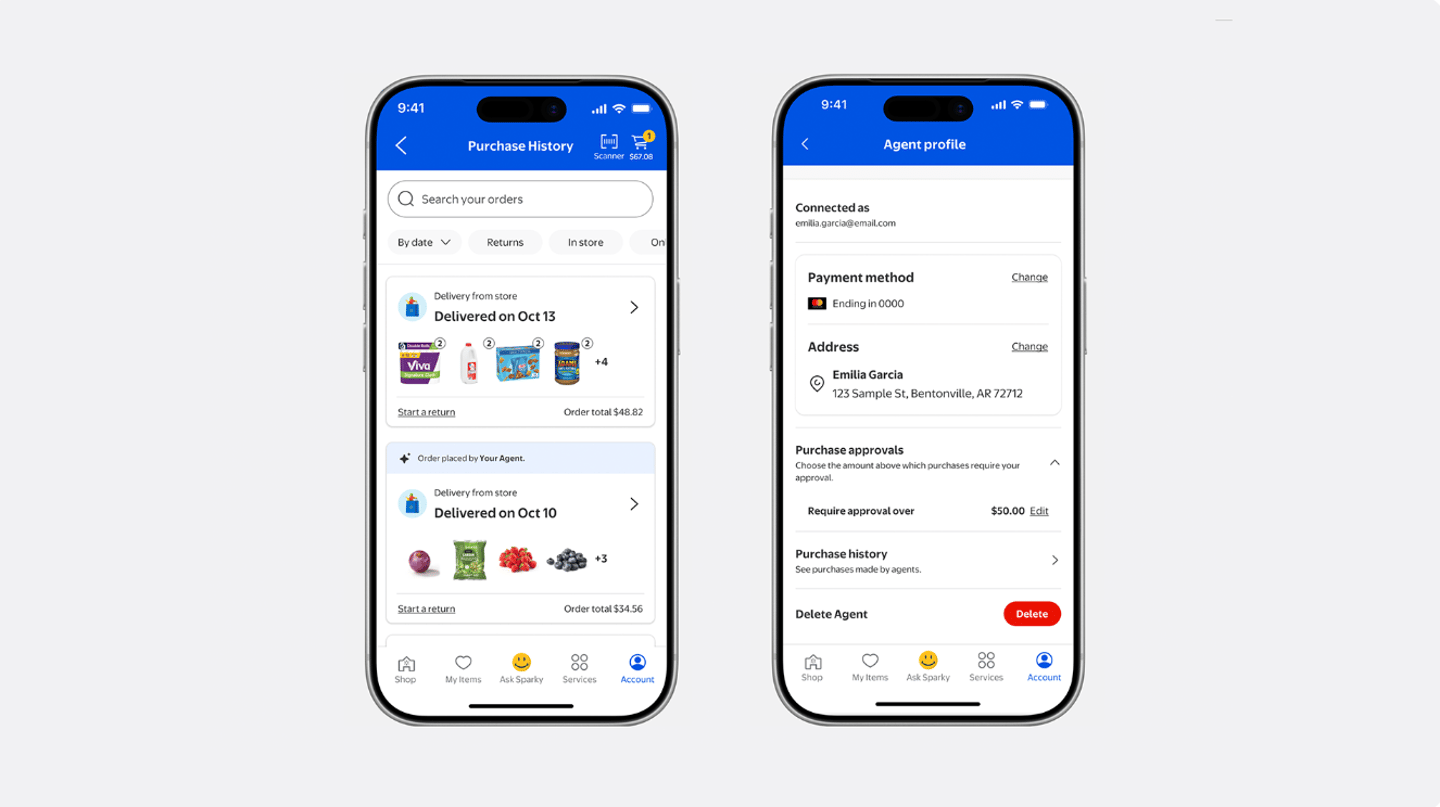
Walmart’s Agent Profiles, expected to launch within the next month, will give each authorized AI agent a dedicated profile within a customer’s Walmart account. Shoppers will be able to distinguish agent purchases from their own and require approval for every purchase or set spending limits, such as $50, $100 or $200. Customers can revoke an agent’s access at any time.
The Walmart Agent Gateway is designed to give compatible AI agents a faster, more reliable way to interact with Walmart’s shopping systems. Using the Model Context Protocol (MCP), the gateway aims to reduce errors that can occur when agents navigate websites designed for human users. Walmart’s Agent Gateway landing page describes the system as connecting AI agents through Sparky, the retailer’s AI shopping assistant. The gateway is in an early beta phase, with companies and developers able to request access.
Walmart also established rules for agents shopping on its platform. Agents must follow shoppers’ instructions, cannot access payment-card information or change payment methods, and may be blocked if they violate Walmart’s terms. The gateway also is designed to help agents find customers’ usual products without sharing their broader purchase histories with third-party agents, although information shared with AI providers remains subject to their privacy policies.
The initiative builds on Walmart’s existing digital shopping ecosystem, which includes its stores, website, pickup and delivery services, Sparky and conversational commerce integrations with platforms including Muse, ChatGPT and Gemini.
Implications for Retail Media, Advertising
Beyond the shopping infrastructure itself, Walmart Connect, executives highlighted the potential implications for product discovery and advertising.
In an Oct. 22 LinkedIn post, Ryan Mayward, SVP and General Manager of Walmart Connect in the U.S., said conversational shopping could give brands a richer understanding of what consumers are trying to accomplish.
“A few keywords tell us what someone is searching for,” Mayward wrote. “A conversation can tell us what they're trying to accomplish, what matters to them and what might actually help.”
That context could create opportunities for brands to introduce products that shoppers might not have discovered through traditional search.
“As shopping becomes more conversational, the way brands earn attention will evolve too,” Mayward wrote. “The opportunity is to be relevant to what a customer is trying to accomplish, not just what they're searching for.”
Rich Lehrfeld, SVP of Walmart Connect International and Sam’s Club Connect, similarly pointed to the potential for agentic commerce to expand product discovery.
In his LinkedIn post, Lehrfeld described a scenario in which an AI agent recommends a traditional Mexican cooking tool from a smaller seller to someone who enjoys cooking and wants to try something new. For advertisers, he said, this could create opportunities to introduce relevant products even when shoppers have never heard of the brands.
A New Consideration for Brands
The executives’ comments suggest that agentic commerce could broaden the moments in which brands influence shopping decisions, moving beyond keyword-based searches toward recommendations informed by shoppers’ goals and interests.
For retailer media networks and commerce media providers, that raises questions about how products will be surfaced in AI-driven experiences, how sponsored recommendations might work and how retailers will measure advertising’s influence on purchases initiated through agents.
Walmart has not yet detailed whether or how the new gateway will affect advertising placements, campaign measurement or attribution.
For now, the retailer is establishing the infrastructure and customer safeguards needed to support agent-assisted shopping. For brands and agencies, the next challenge will be understanding how these emerging experiences could reshape product discovery and the path to purchase.