Creating Routines and Habits Around Your Brand: Getting More Out of the Programming You Already Plan
Your last shopper program reached your most valuable consumers: the shoppers actually buying your product. Then it let them go.
You know how it goes. The brand team sets direction and the shopper team implements it at retail. The program launches, shoppers participate, sales lift, the retail partner is happy, and everybody assumes those consumers will come back on their own. The recap answers the usual questions: program results and KPIs, incremental sales, and whether it strengthened the relationship with the retailer. Six months later the next program starts from scratch, with a new site, a new audience to recruit and the same questions about what actually worked.
Most shopper programs stop short of realizing their full potential. Every program presents an opportunity to surface three things of lasting value: the shoppers who said yes, the answers they could give and learning about what worked. Without a plan to retain first-party data, the brand keeps none of them.
The audience nobody owns
Shopper marketing funds and runs many of the programs that bring shoppers to the brand, but it’s measured on retail outcomes: retailer buy-in, sell-through and conversion at shelf. Building and managing a consumer database isn’t the shopper team’s job. First-party data belongs to the brand team or a central CRM group.
Many brands believe their first-party data needs are covered: the digital marketing department or an agency partner manages a CRM and email list. But a consumer who receives a generic email doesn't feel appreciated or understood — two things that drive loyalty. The tools alone don’t bring the data together to change that.
So the most valuable shoppers keep leaking out because the connection is never maintained. Shopper marketing recruits them, and nobody is set up to keep them. It’s no one’s failure. It’s simply value lost between teams.
And it costs the brand. Retailers and platforms own the purchase data and the customer relationship, so brands pay to rent the same attention over and over. Paid and retail media still matter, but rented reach is a cost that comes back every program.
Any promotion can build an audience, without adding a job
Shopper marketing doesn’t need to become a CRM team, and no special kind of promotion is required. A sweepstakes, an instant win, or a sampling campaign can drive trial and sales while recruiting shoppers who opt in to hear from the brand again.
What’s needed is a shift in perspective. Between programs, brands should keep shoppers engaged and rewarded through micro-experiences, personalized messages or ideally a brand experience hub where every promotion and activation lives.
We’ve seen this work at scale. A global beverage brand ran a national program through a single branded experience hub. Over 100,000 shoppers joined, more than half a million purchases were verified and 4 in 10 of those shoppers came back for a later program tied to purchase.
What each team gets
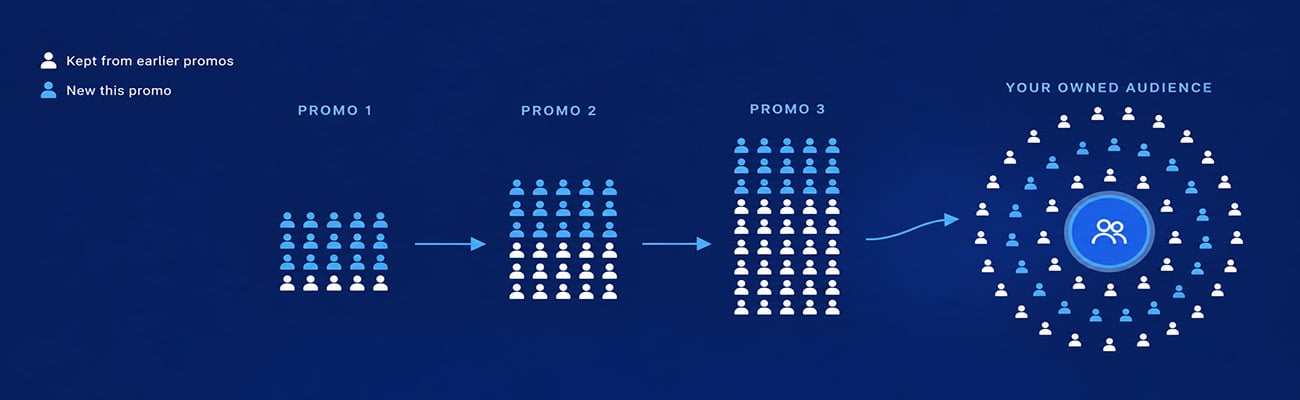
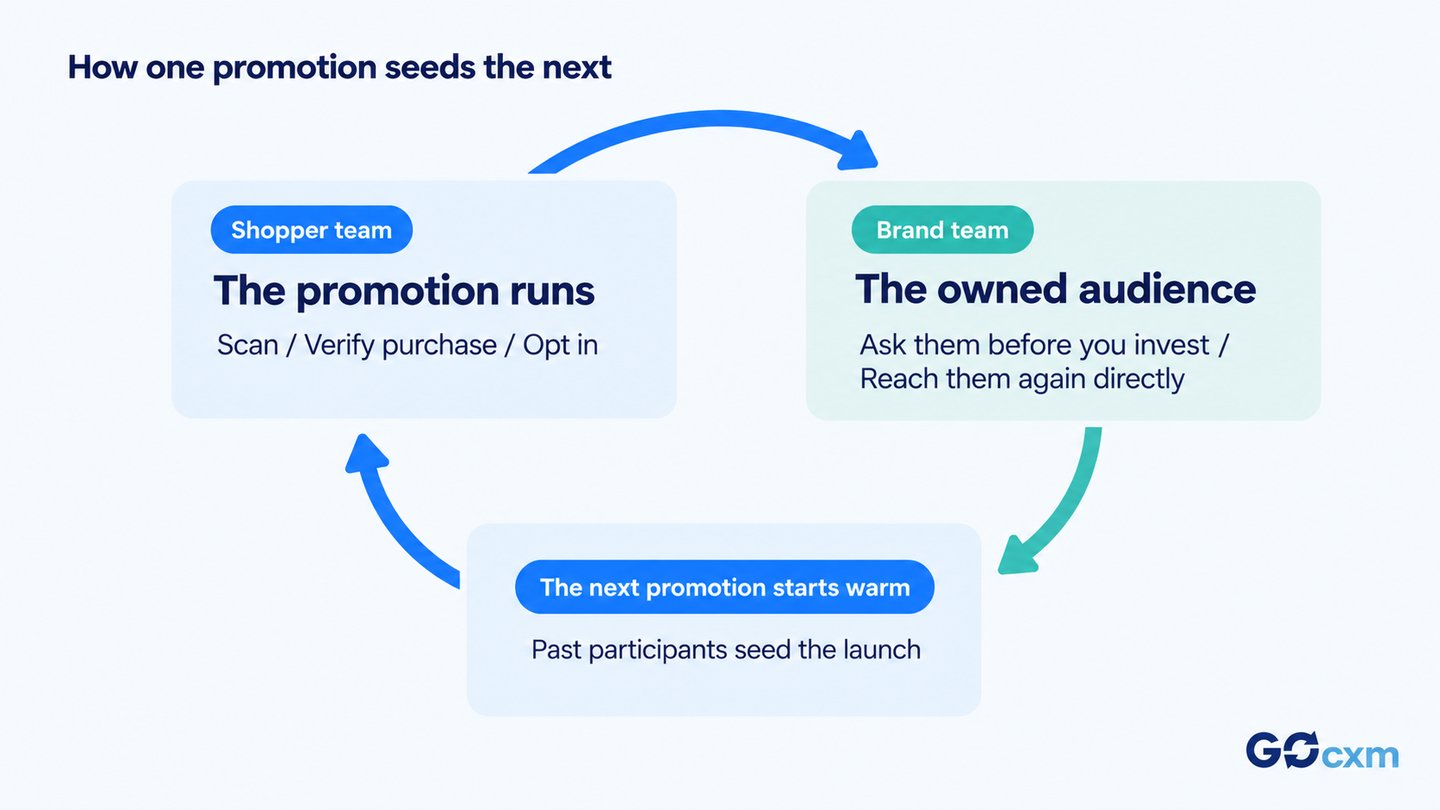
The shopper team uses the relationship to seed the next program, and the brand team owns it and learns from it.
For the shopper team, it’s a head start. Most programs launch cold. A warm audience kickstarts the next one. Ask the brand team to email past participants and seed the launch, with no new retail media buy or shopper marketing spend, just a message to shoppers who already said yes. That drives repeat purchase and velocity.
For the brand team, it’s a research panel it already owns. Before committing to a new flavor or pack change, the brand can ask consumers who’ve already engaged why they switched and what they’d try next. The answers come from consumers who know the brand, not strangers paid to fill in a survey.
Both teams get the learning. An audience compounds, and so should what you learn. When media, the program and verified purchases are connected, teams see which tactics, channels and stores convert while the program is live, so each program builds on the last.
Will shoppers actually join?
Yes, if the value exchange is clear. In a 2025 Incogni survey, 78% of U.S. adults said they’d share personal information for discounts, perks or free shipping.
Four questions to ask before your next promotion
Where will the shoppers this promotion brings in go when it ends? Will the brand be able to ask them what it needs to know? Will your next promotion start further ahead than this one? What will your brand give its most loyal consumers in exchange for their time, attention and input?
If the answer to any of these is unclear, the program is stopping short.
Where GOcxm fits
GOcxm is the data, AI and technology platform purpose-built for CPG. We believe the value isn't in the program results, but the insights that inform the next one. Meet us at P2PI's InStore Ignite conference, Nov. 10–12, in Chicago. Learn more at www.gocxm.com