Connected Stores, Screens: Ahold Delhaize USA's Omnichannel Playbook

The customer journey is rapidly shifting from a linear experience to a dynamic, non-linear and moment-based engagement across multiple touchpoints.
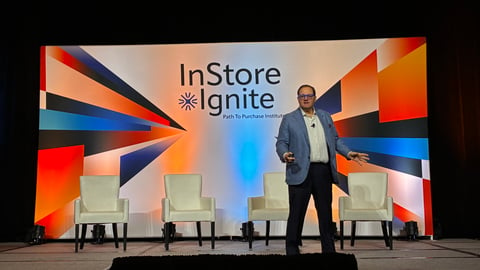
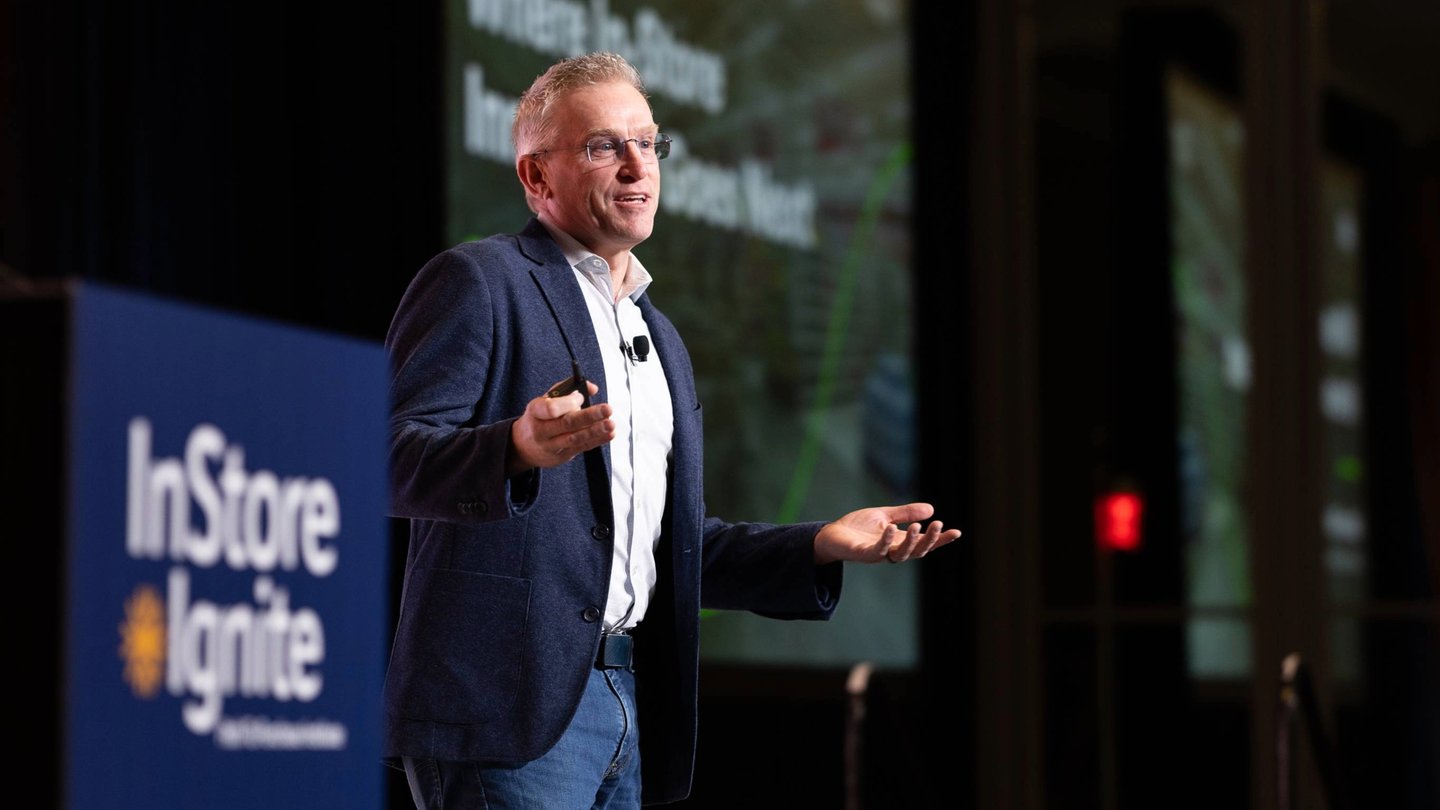
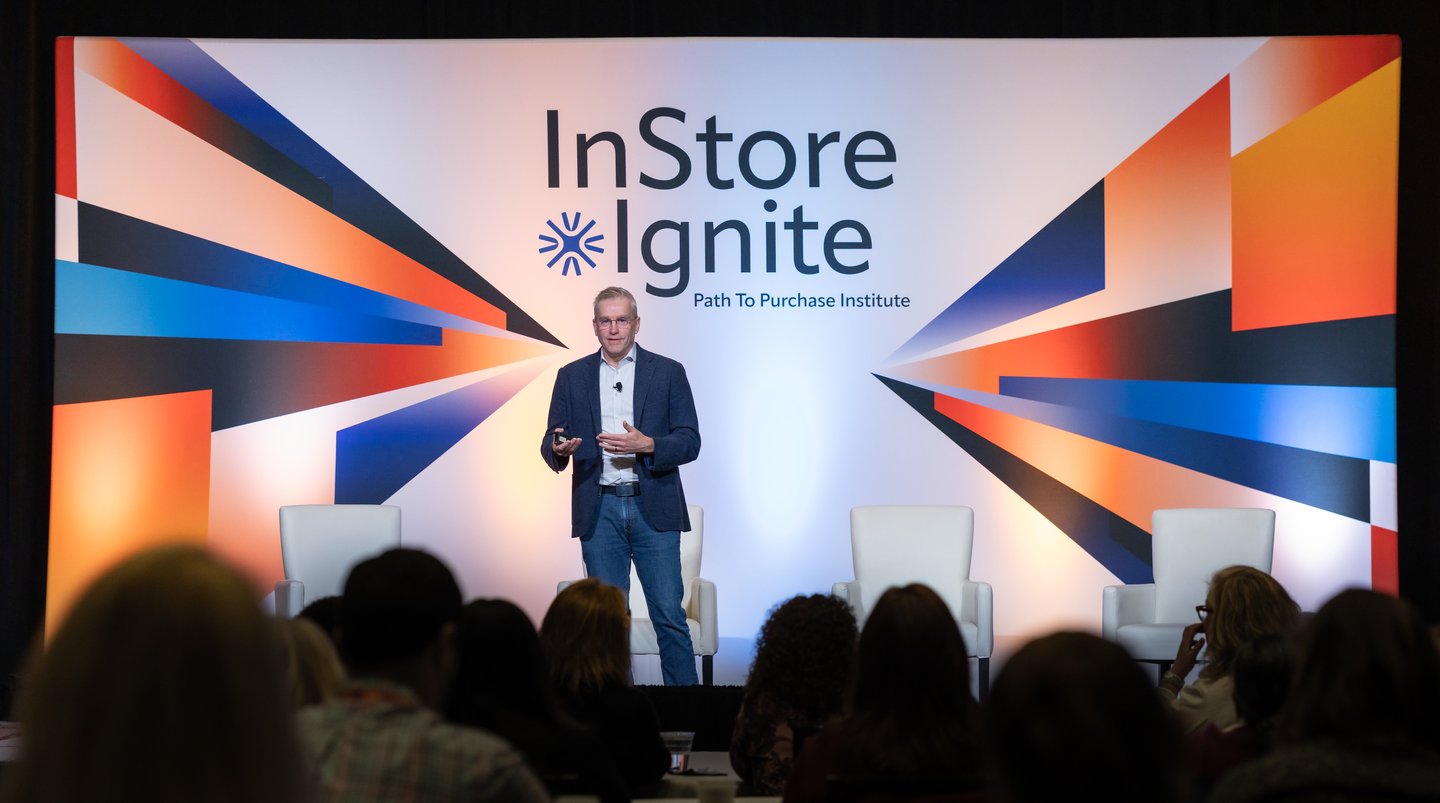
Bobby Watts, senior vice president of AD Retail Media, digital merchandising and marketing for Ahold Delhaize USA (and a Path to Purchase Institute Hall of Famer), discussed the future of in-store innovation at P2PI's InStore Ignite on Nov. 11. According to Watts, three strategic pillars will guide this future: connected stores, personalization and nutritional support.
For the longest time, the print circular served as a foundation — a "rinse and repeat" cycle that informed what was featured in-store. Today, however, retailers can map the myriad moments they have to engage with consumers before those shoppers even arrive at the store.
That connection time has drastically condensed — often to just 4 to 12 seconds at the shelf. Consequently, the journey to get customers' eyes on specific SKUs is equally compressed.
"It becomes really important to understand how you can communicate with folks across these moments in a way that inspires them to come to your brand," Watts said. "We all have these tremendous touchpoints where we can engage with shoppers. How do we plan those?"
Typically across ADUSA's five U.S. banners, the retail media team, CPG partners, category merchandising and loyalty teams collaborate. The ultimate goal, Watts explained, is "to stitch it all together for the consumer in a way that's seamless."
Also read: Hall of Fame Profile: Bobby Watts, Ahold Delhaize USA
Connected Stores
The goal is getting customers in-store, but once they're there, "what does that experience look like for them?" Watts said. Retailers must focus on making the visit easier, more relevant and more rewarding.
To achieve this, ADUSA is deploying a major connected store initiative across its banners. First, the company teamed with Pear Commerce to link its banners and e-commerce platforms to CPG partners and digital touchpoints. Second, they are installing NCR Voyix Commerce Platform technology to unify and upgrade in-store software across all points-of-sale.
The grocer is investing heavily in digital screens, informed by insights from sister brands in Europe and Indonesia that have utilized the technology for nearly a decade. Stateside piloting helped ADUSA identify the most impactful locations for these screens.
Research uncovered distinct locations with high discovery potential: the entry point in the front of the checkout area, and the store racetrack. Additionally, the fresh and pharmacy departments perform well due to their high dwell times.
Because the retailer already had some screens in its fresh departments, it launched Edge, a proprietary ad tech custom-built for the grocery sector. Edge currently powers sponsor product ads, on-site displays and insular digital screens.
By year's end, ADUSA will have screens deployed in approximately 850 stores, bringing its total network to more than 3,000 screens. By the close of 2027, the company plans to operate over 7,000 screens across its U.S. footprint. This scale creates vast new opportunities for CPG partners to build custom solutions and work closely with the retailer. Ultimately, Watts noted, the connected store framework allows ADUSA to leverage data to better understand consumers and track emerging trends.
Also read: How Giant Food, Ahold Delhaize USA, Carrefour Are Rewiring the Store for the GLP-1 Era
Personalization
Personalization remains critical to the omnichannel experience. "People want to know that you know them, and they want to know that you value them and are going to reward them with offers and things like that at the shelves, but also when they're shopping online," Watts emphasized.
"Personalized offers are the way for us to do that while they're actually in the store. The other thing that I think is a really unique feature for in-store is wayfinding."
When a customer is shopping in-store, the retailer wants to make it easy for them to find their desired products, while simultaneously balancing seamless navigation with impulse buys. "We don't want to make it where they don't have any opportunity to find some impulse products. ... But we do want to make it where it's easy to navigate," he added. That same foundational technology can also streamline how customers shop for online orders.
Driving personalized value for the shopper serves a retailer well — whether engaging through Large Language Models (LLMs) or inside the physical store. Watts sees AI playing a major role in pre-shopping routines, allowing customers to easily secure their staples. However, people will still visit physical stores for the immersive experience.
"I think the opportunity we have in the store in the future is how do you think about reconfiguring your store to drive more experience, and that doesn't necessarily just mean technology," Watts explained. That could mean baking goods, having classes or wine bars on-site.
Nutritional Support
As consumers increasingly prioritize health, ADUSA is leveraging its platforms to guide them.
"In this new age where folks are really looking for better-for-you, healthier products — the GLP-1 craze — there's so much that consumers are wrestling with, trying to live their lives better and healthier. So how do we support them on that?" Watts asked.
One answer lies in app-based navigation designed to help shoppers discover healthier options, paired with ADUSA's proprietary Guiding Stars technology. Guiding Stars is an in-house rating system applied to products sold across Ahold banners, grading items for healthiness on a one-, two-, or three-star scale.
"These are just customer-facing things," Watts concluded, "that I think really help a shopper inside the brick-and-mortar store."