From the Aisles to AI: Navigating Retail's New Four-Shelf Era

Retail has evolved from physical shelf dominance to a complex landscape defined by digital, social and agentic discovery. Along with that has come the evolution of discovery, according to Jason Goldberg, chief commerce strategy officer at Publicis Groupe.
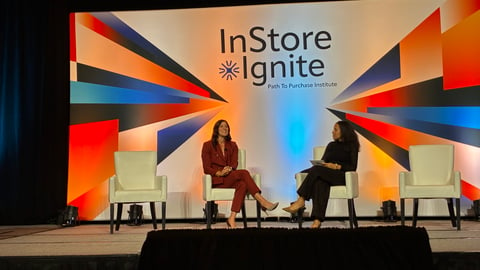
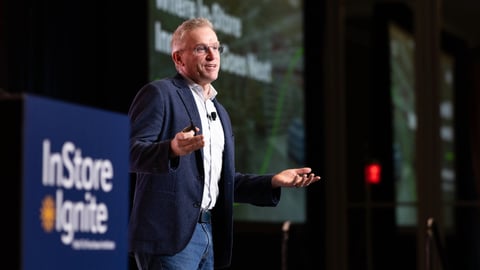
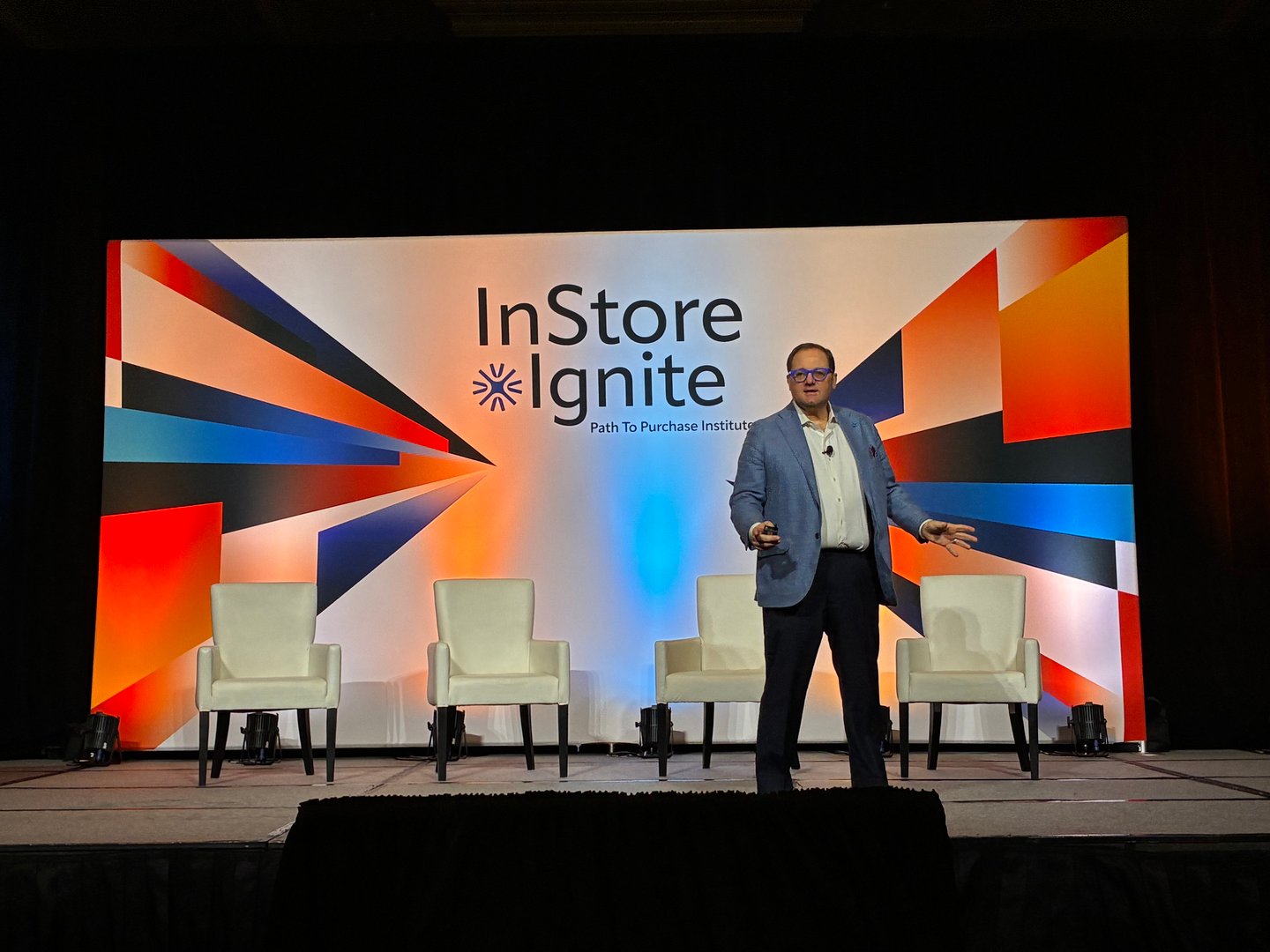
Traditional discovery at the physical shelf — historically known as the "first moment of truth" — is increasingly being driven upstream by social media platforms and AI-powered tools, Goldberg said during his Nov. 12 presentation at the Path to Purchase Institute’s InStore Ignite event in Chicago. Discovery now happens long before a consumer enters a store.
Modern retail success requires brands to integrate their presence across four distinct shelves: the physical shelf, the digital shelf, the social shelf and the agentic shelf.
His core thesis was the "four-shelf problem," which argues that brands can no longer win by focusing solely on the physical store. To succeed, companies must integrate their presence across the in-store experience as well as e-commerce/search, influencers/social media and AI/robot recommendations.
Agentic commerce has seen shoppers move beyond simple e-commerce clicks. Future commerce trends toward zero-click automation where personal agents manage continuous purchasing and pantry replenishment based on user habits and schedules. “Hey Siri, hey robot, never let me run out of ingredients for my kid’s lunch,” Goldberg posed as a possible command to drive home that point.
We have seen the Rise of three robot types, Goldberg said. AI agents competing for consumer attention include horizontal agents (foundational models like ChatGPT, Claude and Google), vertical agents (retailer-owned tools like Amazon's Rufus and Instacart's Clementine), and personal agents (individualized assistants like Muse or Instinct) that act on behalf of users to manage tasks like pantry replenishment.
“Right now we're having a battle for attention,” Goldberg said. “That first moment of truth is moving from the store to the robots, and there's three completely different kinds of robots with different motivations, different priorities and different influences, all fighting for the attention of our shop.”
Using Walmart as a case study, Goldberg said that under the leadership of former president and CEO Doug McMillon, the retail giant transformed from viewing AI as a risk to becoming a leader in agentic commerce by deploying AI tools to 1.7 million associates, building proprietary agents, and investing heavily in AI leadership.
Goldberg suggests using a fast-follower strategy, as historical data shows that first movers face a high failure rate, making a "fast follower" approach safer and more effective for brands navigating the transition to the four-shelf model.
“I know this can be overwhelming. I know this can be daunting,” he said. “I know what it feels like to sit in the audience of a trade show and have some schmuck from an ad agency get it up on stage. You go, the world's changing; what we're really good at is melting. The iceberg is melting. … You guys better think about migrating off the iceberg. You got to get up to the edge of that iceberg and jump in the ocean and swim across the ocean, or you're going to die because of global warming. I know exactly what that feels like. I've been in that audience when that conversation was happening, and I just want to tell you, as scary as it is to be that first penguin to jump off the iceberg, you've got to do it.”
Goldberg continued: “As it turns out, first members fail half the time; high risk. Fast followers fail 8% of the time. Right? So our job in this audience is to take all the strengths in our brand, all the strengths in our customer love and our credibility, all our rights to win, and make sure that we aim them all at being a fast follower as the world moves from one shelf to four shelves.”