How Giant Eagle's Loyalty Program Drives Engagement, Incremental Sales

Over its 30-year history, Giant Eagle's loyalty program has evolved from a simple Advantage card that offered sale access into a multichannel "my perks" rewards program where customers earn points across supermarket purchases, pharmacies and fuel pumps. Now, it's driving incrementality among the "most loyal" cohorts.
Program members have the flexibility to redeem the rewards for discounts at the store or the pump. (Current usage numbers show a 60-40 split favoring supermarket redemption over fuel.)
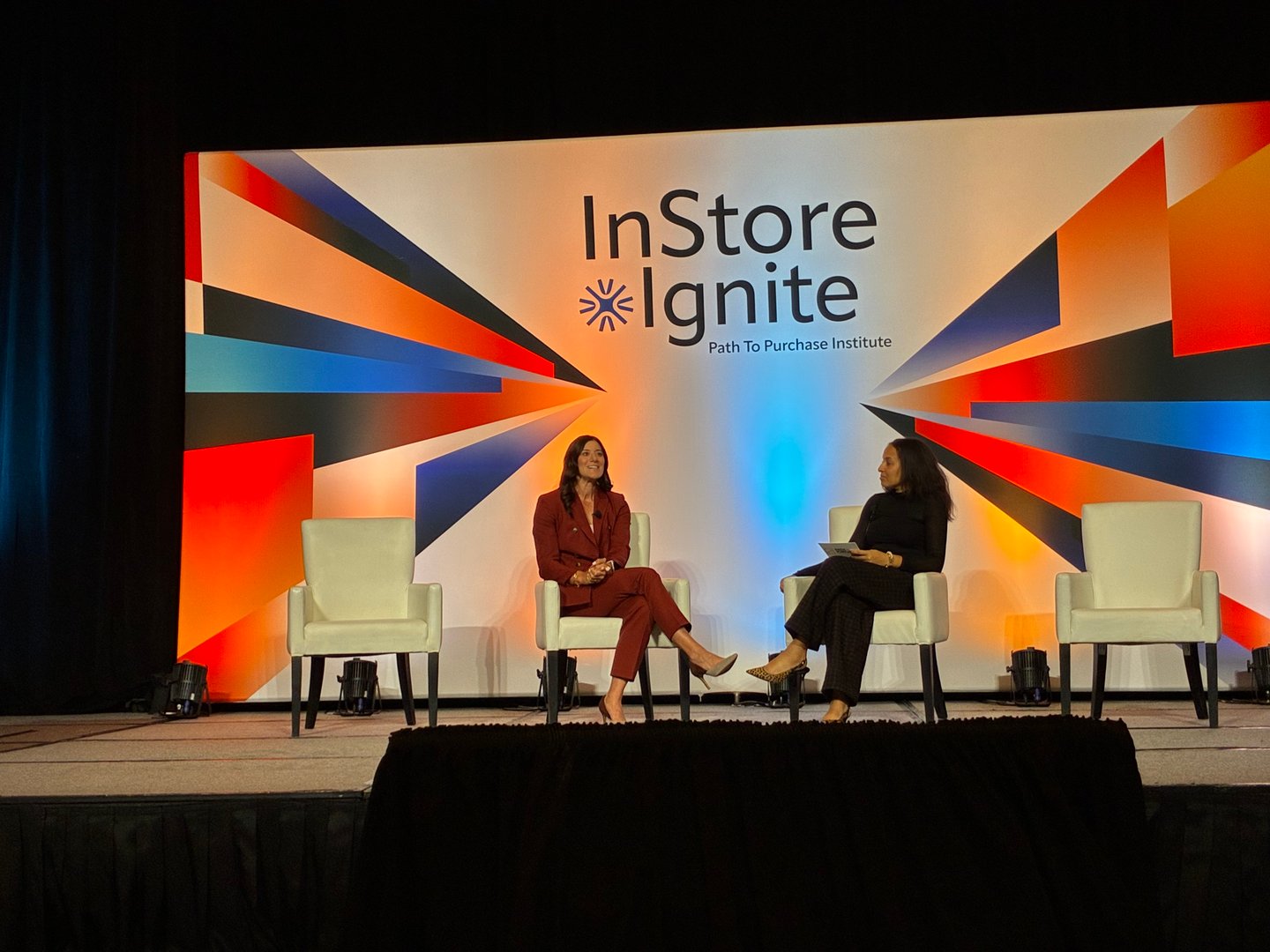
During an InStore Ignite session from the Path to Purchase Institute on Nov. 12 in Chicago, Giant Eagle’s Kasey Sheffer, vice president, marketing and own brands, discussed the evolution and strategic value of the chain’s loyalty program in driving customer engagement and incremental sales.
“This loyalty program very much has become a two-way street, both delivering value to our customers on top of the experience in the store, but then also serving for us the unlock of what we can potentially learn about our customers and know about them and use that to create a better experience,” Sheffer said during a conversation with P2PI’s Tara Donaldson.
Sheffer emphasized that digital engagement is the key to unlocking personalized customer insights and reducing connection costs. Approximately one-third of Giant Eagle’s shoppers are digitally engaged, allowing for real-time, personalized communication. The remaining 70% are reached via traditional methods like snail mail, though Giant Eagle uses QR codes to drive digital opt-ins.
To drive incrementality, the retailer hosts multiplier events aimed the "most loyal" cohorts in which they earn up to 5 times points. That has resulted in 6 to 8 additional units per basket.
“These most loyals come to us to feed their families, to run their home,” Sheffer said. “They're really doing most of their shopping with us. I think you would assume that they're really saturated in their purchases with us. … But with our most loyals, we have just begun deploying over the past year or so some activities that are really speaking to them, encouraging them to purchase even more with us, which is kind of a novel idea.”
The loyalty program serves as a bridge between marketing and merchandising teams to balance macro financial goals with micro customer behaviors. Merchandising focuses on macro P&L management and budget adherence. Marketing uses loyalty data to provide a micro view, identifying specific segments that may not be reacting to category trends.
For emerging brands, Sheffer recommended co-creating plans with category teams rather than following a rigid playbook.
“I would say just be open-minded,” she said. “You know, just be willing to work with your category teams as your conduit to say, "Hey, here's our objective. Here is what I think to be the benefit of us working together and really helping to get this brand off the ground in your stores. What do you have available? What are the tactics? What are the channels that we can go and deploy? Help me create or co-create that plan that makes sense for us and our specific objectives.”
Sheffer added that Giant Eagle’s long-term goal is to deepen trust by using data to provide highly relevant product recommendations and seamless shopping experiences. The retailer aims to move toward an environment where AI-driven shopping becomes a standard part of the customer connection.