Forget the Shrinking Basket: How Brands, Retailers Are Rewiring the Store for the GLP-1 Era

GLP-1 drugs blazed onto the market a few short years ago, leaving retailers and brands alike wondering if they were a passing fad or a force reshaping the shopping experience.
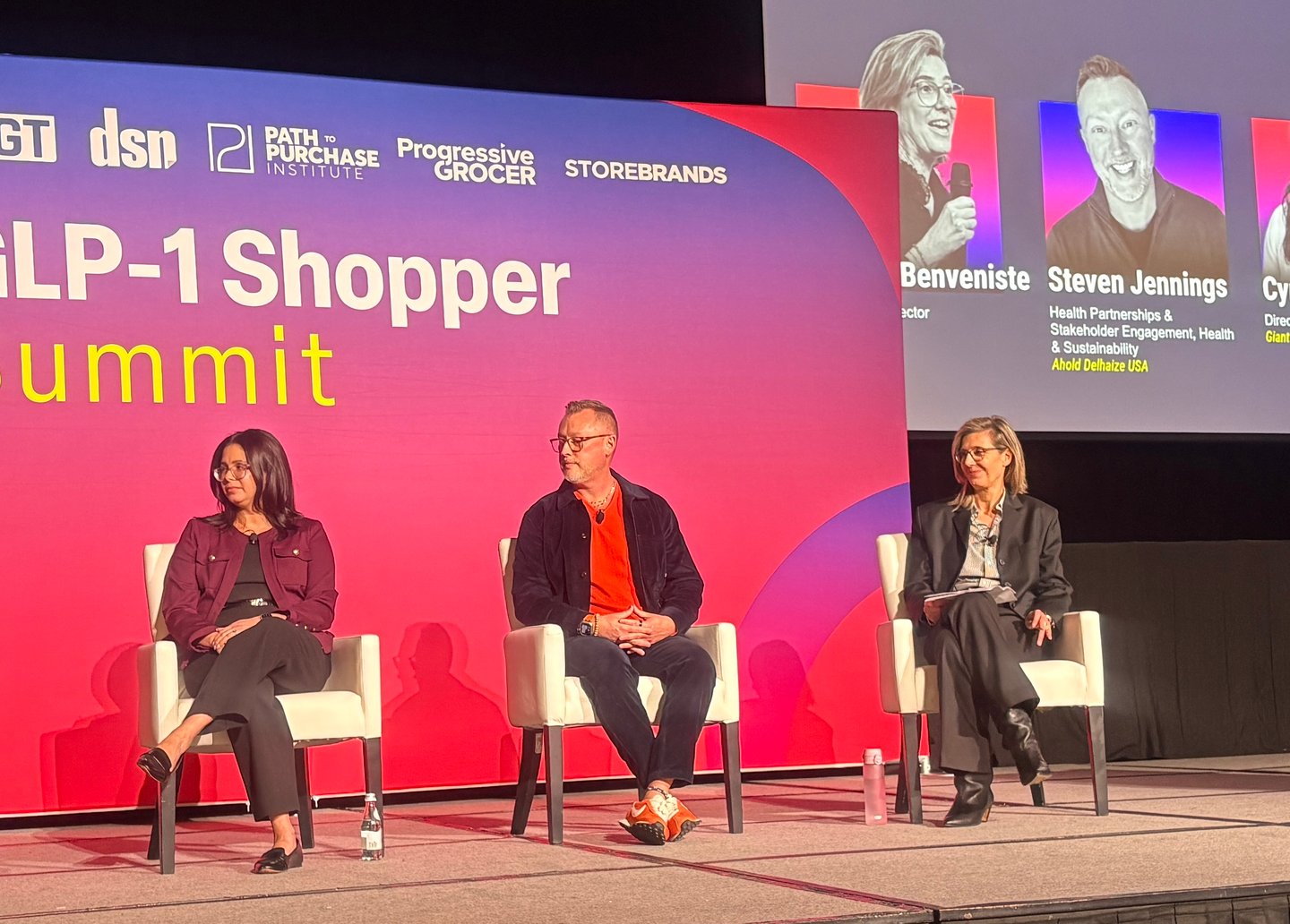
At the Path to Purchase Institute's inaugural GLP-1 Summit on Nov. 12, executives from Giant Food, Ahold Delhaize USA, and Carrefour sat down with P2PI Senior Editor Cyndi Loza to discuss the structural shifts GLP-1s have brought about. From meeting the demand for healthier fare to adapting categories beyond food, here is how the store of the future is taking shape.
Edited Baskets and Real-Time Category Shifts
One common concern is that GLP-1s are leading consumers to simply buy less. But rather than shrinking, baskets are being "edited," noted Cynthia Volk, director of grocery merchandising for Giant Food. "Consumers are more intentional about what they're purchasing."
Just two years ago, mentioning GLP-1s outside the healthy living space proved challenging, as many viewed it as a fleeting trend, said Steven Jennings, Ahold Delhaize USA's lead for health partnerships & stakeholder engagement. Today, data proves it is here to stay — including data Sally Lyons Wyatt, global EVP and chief adviser, Consumer Goods & Foodservice Insights for Circana, presented at the GLP-1 Summit. (Ahold Delhaize USA, including its Giant Food banner, uses Circana data.)
Juliette Benveniste, group offer director at Carrefour, agreed, noting that GLP-1s aren't a threat, but a "powerful tailwind" for the retailer's healthier eating strategy. Carrefour uses Brazil as its "live test lab." With adult GLP-1 penetration at 6% — and poised to grow once generic semaglutides hit the market and drop prices — the retailer is watching an extreme category shift in real time. Demand is dropping for large sweets, salty chips and sugary sodas, while fresh foods, functional hydration and high-protein items are on the rise. Carrefour plans to apply these real-time learnings to its European markets.
Integrating the Assortment for Simpler Discovery
To meet this intentional shopper, retailers are rethinking store layouts. Rather than isolating natural or organic options into "exclusive clubs" that limit discovery, integration is key.
"The solution we're looking for is finding a simpler way so that our customers don't have to shop two stores within one store," Volk said. By stocking traditional, organic, gluten-free and protein-enhanced pastas in the same destination, Giant Food aids comparison and simplifies the shopper's mission. Jennings agreed, noting that placing organic next to traditional products side-by-side encourages consumers to "up-purchase" to better-for-you items.
For Carrefour, the merchandising strategy hinges on a simple formula: high protein + great taste = indulgence. The retailer is actively downsizing shelf space for traditional indulgences like sweets and alcohol to reinvest in functional growth categories like fresh products and non-alcoholic beers. Rather than using isolated GLP-1 labels that could stigmatize shoppers, Carrefour uses "better eating" shelf tags to highlight functional benefits like high protein and fiber.
Retailers are also balancing this shift with agility. While merchandising teams monitor social media to track crazes like feta or Dubai chocolate, physical changes take time. Giant stays agile online with dedicated protein and fiber pages, but Volk noted that in-store fixture changes require validating sustained purchase data first.
Building Cross-Functional Health Ecosystems
Navigating this behavioral shift requires collaboration. "Neither CPGs nor retailers can navigate it alone," Benveniste said. Carrefour recently workshopped with Mars to tailor offerings by market, share supplier scoring so CPGs can reformulate recipes, and leverage Hopla — Carrefour’s generative AI assistant — to suggest automated smart swaps.
Domestically, Ahold Delhaize is positioning its locations as health destinations by bridging the gap with healthcare ecosystems. When healthcare plans include "food as medicine" benefits, customers often turn to in-store pharmacists for help navigating how to fulfill them.
Giant Food takes a similarly collaborative approach, leaning on its CPG community alongside internal pharmacy, consumer insights and Healthy Living teams to guide merchandising decisions. The retailer even offers digital and in-store shop-alongs to educate the community.
The 2030 Vision: Holistic Wellness
Looking ahead, industry leaders anticipate that market winners will seamlessly merge food, healthcare, drugstore, beauty and AI into one interconnected wellness experience.
Ultimately, however, success will come down to retail fundamentals. "Stay focused on the consumer needs, not necessarily one attribute or change," Volk advised. "We have to make it easy for our customers to find the products they're looking for, help provide education and understanding, and make it affordable."