Why Retail Media Has Outgrown the CPG Org Chart

Retail media has evolved from a commerce tactic into one of the most important growth engines in CPG.
Brands are investing more than ever. Retailers continue to expand their media capabilities. New channels, formats and measurement tools seem to emerge every day.
Yet despite retail media's growth, many organizations are struggling to answer a surprisingly simple question: Is it actually driving incremental business growth?
Measurement remains inconsistent. Retailer capabilities vary widely. Off-site activation raises questions about transparency and value. In-store retail media shows tremendous promise but remains difficult to scale.
These challenges are real. But they may not be the industry's biggest problem.
The larger issue is that retail media has evolved faster than the organizational structures designed to manage it.
For years, retail media was managed as a tactical discipline. E-commerce teams manage retailer relationships. Media teams managed activation. Sales organizations focused on joint business planning and merchandising. Analytics teams measured results.
That model worked when retail media consisted primarily of sponsored product ads and a limited set of retailer platforms.
Today's reality is far more complex.
Defining Retail Media Success
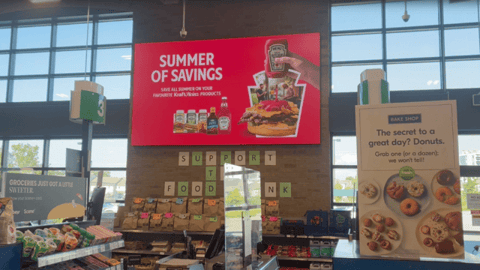
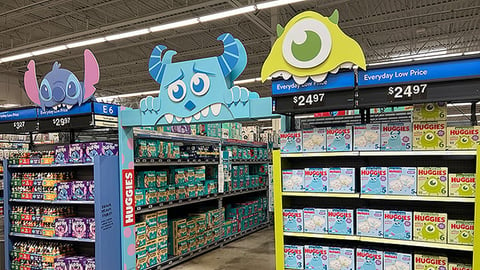
Retail media now spans onsite, offsite, social, connected TV, video, influencer content and emerging in-store environments. Success increasingly depends on connecting media exposure, shopper behavior, retailer data, digital shelf performance and business outcomes across channels.
In recent research among CPG marketers, one theme emerged consistently: Brands continue to increase retail media investment, but many struggle to connect retail media activity to broader business outcomes.
Ask five people how retail media is performing, and you'll often get five different answers. Media teams look at ROAS. Sales looks at retailer relationships and share gains. E-commerce looks at digital shelf performance. Finance wants to know if the business actually grew.
They're all measuring something important. They're just not measuring the same thing.
This disconnect becomes especially visible when brands attempt to answer a critical question: Is retail media driving incremental growth?
As retail media budgets grow, this fragmentation becomes increasingly difficult to sustain.
The challenge is not simply measurement. It’s ownership and accountability.
The issue isn't a lack of data. It's alignment around what success actually means. That is why incrementality has become such an important conversation.
The question is no longer whether a campaign generated sales. It is whether it generated sales that would not have happened otherwise. Answering that question requires coordination across media, commerce, analytics and sales functions that many organizations have historically managed independently.
Artificial intelligence can improve targeting, optimization, forecasting and creative testing. But AI can only optimize toward the signals organizations provide.
If success is defined exclusively by short-term performance metrics, AI will optimize for those metrics. If incrementality, household penetration and long-term business growth are prioritized, AI can help accelerate those outcomes as well.
Cross-Functional Alignment for the Win
Technology does not solve organizational misalignment. In many cases, it amplifies it.
The most successful CPG organizations recognize that retail media is no longer just a channel strategy. It is a business strategy.
Rather than treating retail media as a standalone discipline, they are integrating media, commerce, sales, analytics, content and retailer collaboration into a more unified operating model. The goal is not simply better execution. It is better decision-making.
This shift matters because retail media's future growth depends less on budget availability than organizational readiness.
Most CPG companies are already investing in retail media. The question is whether they have built the structures, governance and cross-functional alignment necessary to maximize their value.
Retail media has already proven it can attract investment. The next phase of growth will belong to organizations that can integrate brand building, commerce activation, measurement and retailer partnerships into a single growth strategy.
Retail media is no longer a media decision. It's an organizational decision.
The brands that win won't necessarily spend more. They'll be the ones that finally align media, commerce, sales, analytics and retailer partnerships around a common definition of growth.
Retail media has outgrown the CPG org chart. The companies that recognize that first will create the next competitive advantage.
About the Author
Sarah VanHeirseele is a seasoned marketing and growth leader serving as the chief growth officer at Blue Chip, a strategic brand commerce agency known for uniting brand building with sales performance. In this role, VanHeirseele drives growth strategies that help clients unlock new revenue streams and navigate the evolving landscape of consumer behavior and digital innovation.