Amazon to Expand Drone Delivery to Nearly 500 U.S. Cities

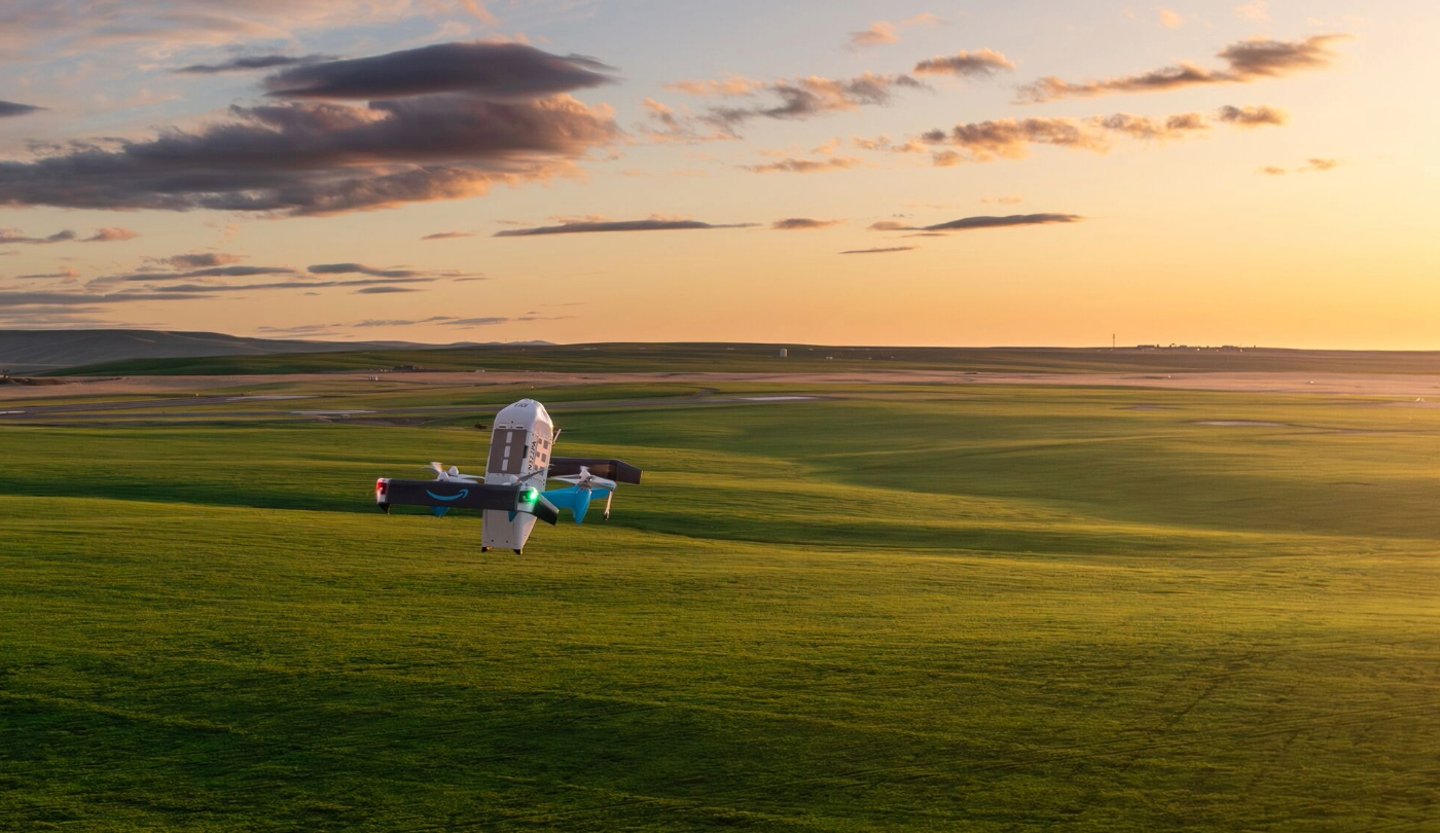
Get ready to see more drones in the sky. Amazon Prime Air has released plans to expand drone delivery to nearly 500 U.S. towns and cities, across communities with tens of millions of customers, by the end of 2026. This expansion represents a sixfold increase in Amazon's established drone delivery service, which currently operates across seven states and has completed hundreds of thousands of deliveries this year.
Prime Air drone delivery currently serves customers in primarily suburban areas across Arizona, Florida, Kansas, Louisiana, Michigan, Nebraska and Texas. It plans to launch soon in the Chicago; Cleveland; Atlanta; Syracuse, N.Y.; and Boise, Idaho, metro areas, with more communities to come later this year.
Each Prime Air site serves an area of approximately 175 square miles.
Amazon said that nearly all items weighing 5 pounds or less that fit in a large shoebox can be delivered by drone, meaning more than 60% of the items customers most frequently purchase from Amazon are eligible. This includes millions of groceries, electronics, cosmetics, medications and household products.
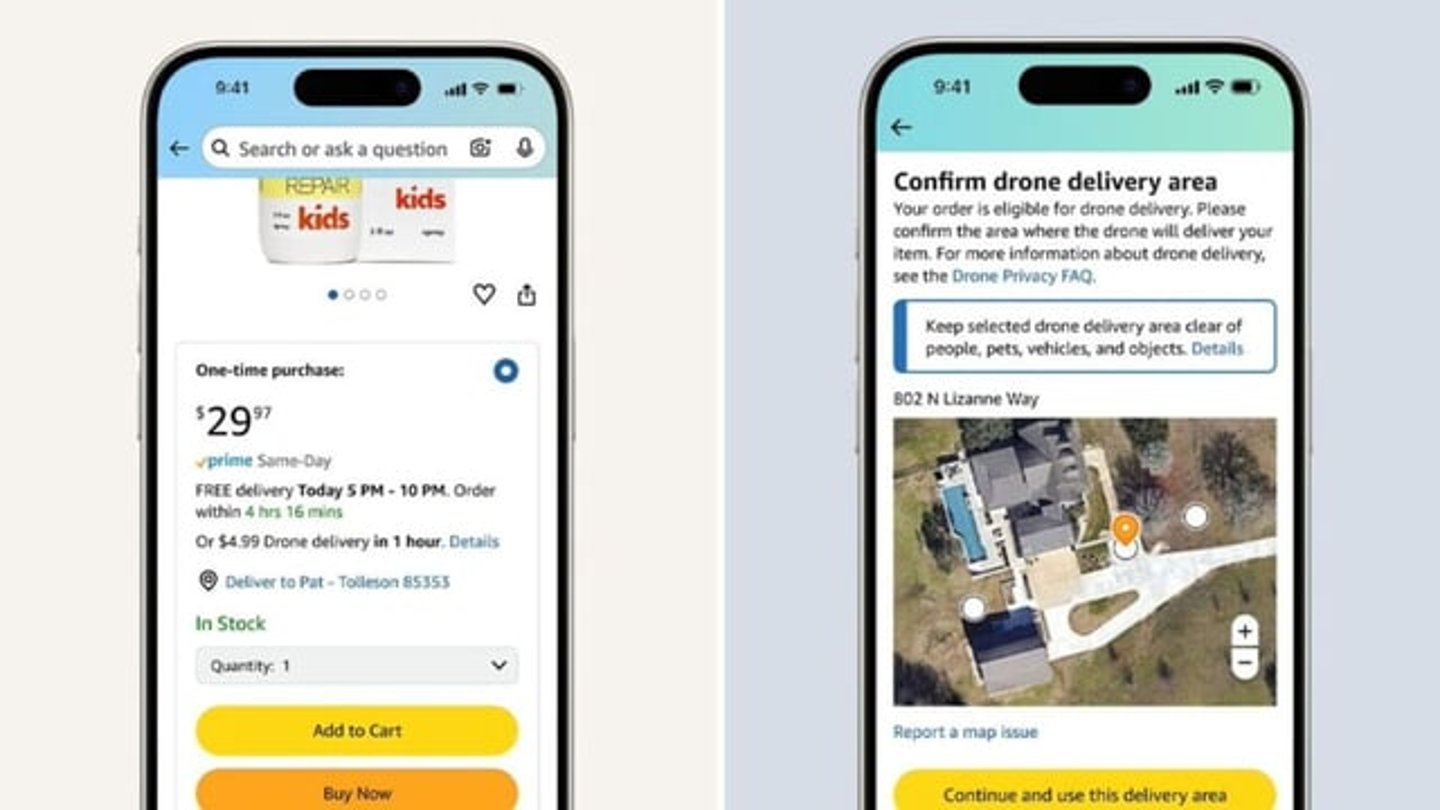
Drone delivery is integrated into the existing Amazon shopping experience. Customers will see and confirm their delivery point when placing their first drone delivery order. They can choose to keep the same delivery point for future orders or select a new area at any time.
Once the drone arrives at the preferred delivery point with a customer's order, it will use its Detect-and-Avoid system to ensure that there are no people, pets or vehicles in the way before delivering the package.
Orders arrive in as fast as 30 minutes, with most arriving around 60 minutes after checkout.
"Customers already turn to Amazon for fast Same- and next-day delivery, and Prime Air provides them an even speedier option when they need it, with deliveries in as fast as 30 minutes," said David Carbon, VP of Amazon Prime Air. "We're pairing the convenience of ultrafast drone delivery with the low prices and selection customers love about Amazon."
Prime Air holds Federal Aviation Administration (FAA) Part 135 certification, the same framework used for commercial air carriers. Multiple systems keep the autonomous drones operating safely and predictably throughout flight. For example, Prime Air drones use onboard cameras and sensors for navigation, obstacle detection and safe delivery. Amazon assures that the devices do not track individuals or record movements. The onboard camera data is processed by the drone itself for safe navigation.
Prime Air also engineers the drones for real-world conditions, like flying in light rain and a range of temperatures. They're also fully electric, with zero exhaust emissions.
Meanwhile, Amazon's biggest retail competitor, Walmart, is also on a quest to turn drone delivery from novelty to norm. The mass merchant recently celebrated its milestone of more than 1 million drone deliveries completed to hundreds of thousands of customers. The 1 millionth delivery comes as Walmart continues to rapidly expand drone capabilities with such delivery providers as Wing and Zipline.
DoorDash also recently received Part 135 air carrier certification for its in-house drone delivery program, DoorDash Air. The program is expected to begin commercial deliveries as early as fall 2026.
Fellow delivery platform Uber Technologies is also upping its stake in ultra-fast drones. Its first deployments will begin later this year, when Uber Eats customers will have the option to receive their orders in minutes via Zipline’s autonomous drone delivery.
For Prime Air customers, Prime members get free ultra-fast drone delivery as an exclusive perk on orders of $50 or more. Prime members with orders under $50 will be charged the $2.99 delivery fee. Customers without a Prime membership pay a $4.99 delivery fee.
This article was originally published by P2PI sibling brand Progressive Grocer.