Inside Kroger's Push to Turn AI Recommendations Into Purchases

The Kroger Co. is looking beyond whether shoppers try its AI shopping assistant to whether they return, purchase recommended products and explore categories they typically buy elsewhere.
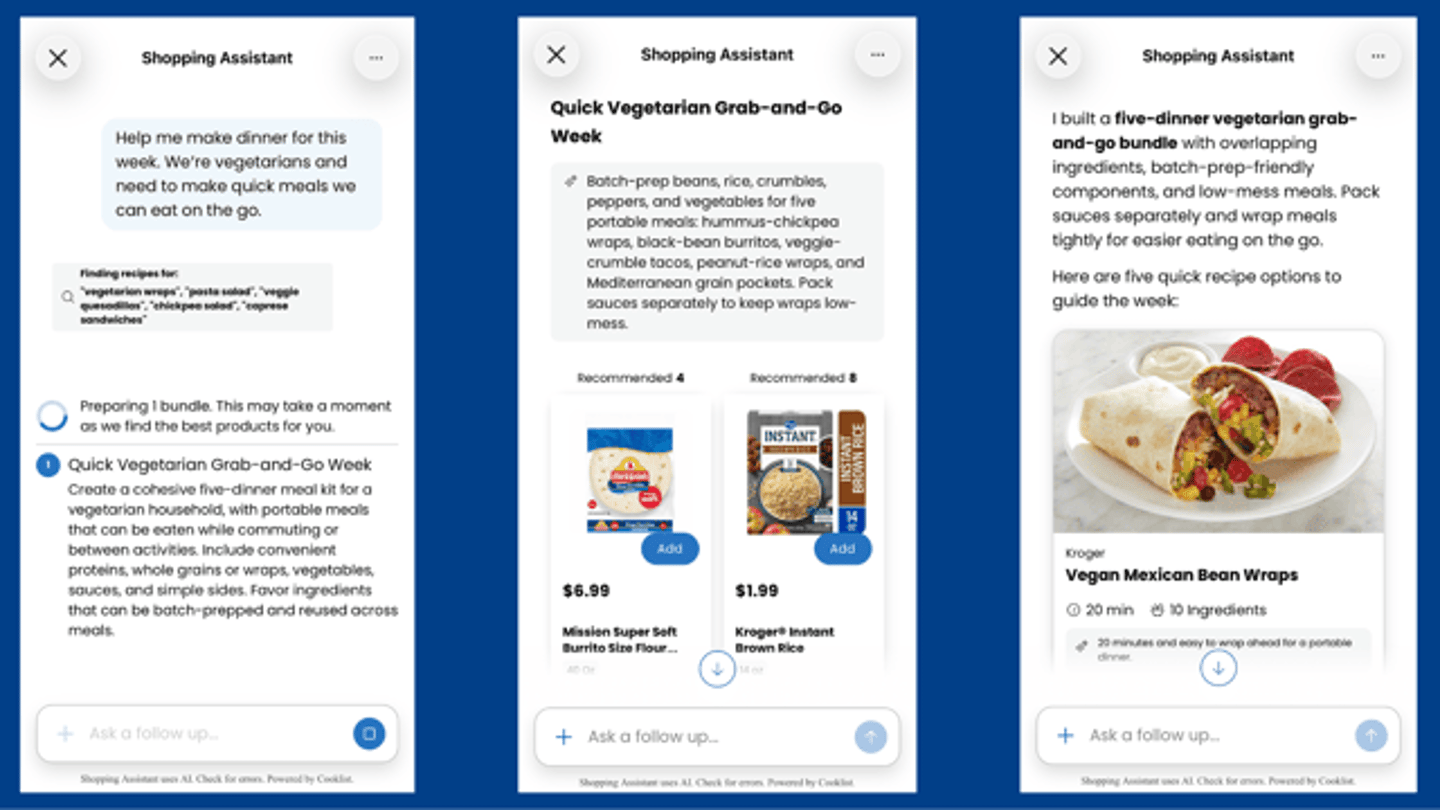
The grocer's longstanding investment in data and data science underpins the assistant, which launched in July and uses shopping history to simplify basket building and generative AI to communicate with shoppers. There's an opportunity to move beyond familiar replenishment to addressing more personal needs, e.g., hosting friends for dinner or weekly meal planning, Yael Cosset, EVP and chief digital officer, shared with Progressive Grocer last week.
Recommendations can currently reflect such preferences as organic products, promoted items or particular brands, alongside availability at the store likely to fulfill the order. Kroger is incorporating increasingly precise inventory signals into its recommendations, with plans to extend that information beyond its own app and website, according to Cosset.
“The idea is to make that signal reliability available not just to our digital properties but to all the partners we may ultimately enable through various protocols and APIs,” he said.
Making Recommendations Relevant
Shopping history and preferences inform how Kroger interprets value for each customer. One may prioritize promotions, while another may value a quality product without being tied to a specific brand. Recommendations are adjusted more rapidly as shoppers interact, shortening the time needed to understand what resonates.
Consumer preferences take priority over commercial considerations, according to Cosset, who said he sees opportunities to monetize relevant touchpoints with CPG partners when those products fit the shopping moment without compromising the customer experience.
“We have a belief that if we can simplify the shopper experience, make it more relevant, we can serve more of their moments [and] occasions. It could be a meal or it could be a category that they typically transact with another retailer."
Cosset also challenged the assumption that greater precision produces a narrower answer. In grocery, he sees more precise, relevant recommendations as a way to expand engagement across different needs and occasions, whether shoppers are planning Thanksgiving dinner or deciding at 4:30 p.m. what to make that evening.
“The more precise [and] relevant you are, the more likely you are to become the destination for more moments, more occasions,” he said.

Delivering on the Recommendation
Earning a place in more shopping occasions also requires confidence that the products the assistant recommends will make it into the customer’s order. Even the best tasting or most affordable recipe doesn't mean much if the shopper can't secure the ingredients.
Fulfillment reliability is therefore a major focus for Kroger’s next phase of improvement. This remains a tricky game of connect-the-dots and musical chairs that requires anticipating replenishment needs and knowing when products will reach the shelf, while sharing availability signals with store associates picking orders and third-party delivery partners.
“All of these pieces are highly variable and highly volatile and unpredictable,” Cosset noted.
The goal is to respond quickly enough to changing conditions that Kroger can reliably deliver the items it promises shoppers.
That reliability could also encourage more frequent, smaller online orders to supplement a larger weekly trip. When customers trust that the items they need will arrive, they have more flexibility to decide on dinner that day.
“Suddenly you can weave it in your day as opposed to have to plan around it, which is removing a lot of anxiety for customers,” Cosset said.
Building the Habit
There is also, of course, the task of getting more shoppers to try the assistant. Kroger is historically a bit conservative in promoting new capabilities, Cosset said. The retailer intends to strengthen the broader customer experience, including pricing, product quality and reliability, before becoming more aggressive.
With that said, greater exposure to the assistant through the remainder of the year is expected, including prompts within the app that introduce shoppers to its capabilities.
Making the assistant part of customers’ routines will ultimately depend on connecting that awareness with a useful experience: helping shoppers solve a meal dilemma, discover a relevant product and receive what they ordered.
This article was originally published on P2PI sibling publication Progressive Grocer.