Nestle Purina, Haleon Execs Discuss Consumer Control in AI-Guided Commerce Landscape
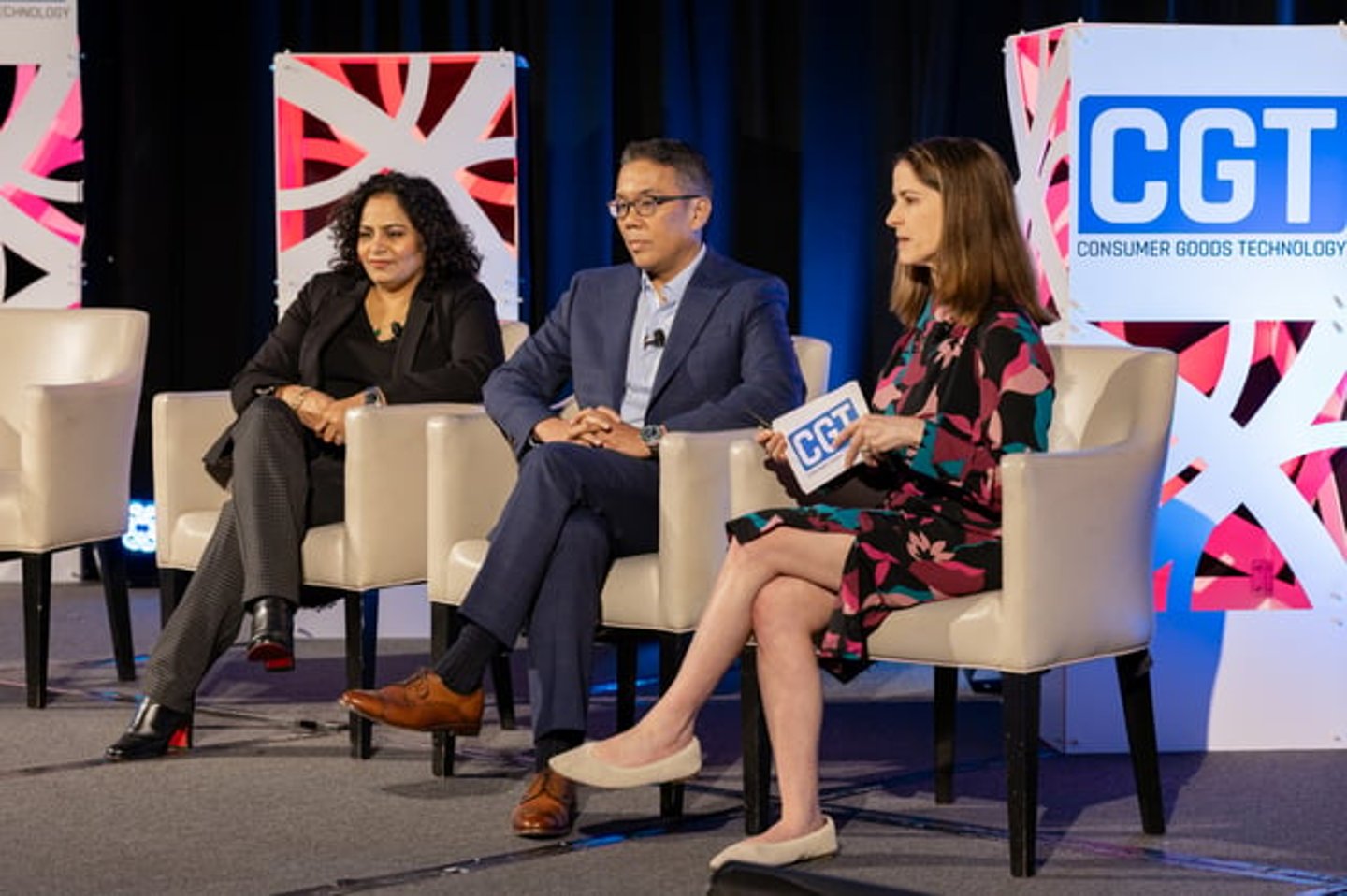
As artificial intelligence rapidly reshapes retail discovery and decision-making, brands are facing a fundamental question: Is the modern consumer truly driving purchases, or are algorithms silently steering the cart? From distinguishing genuine brand loyalty from mere algorithmic convenience to balancing machine-driven personalization with on-the-shelf availability, consumer goods leaders are rethinking the core assumptions that govern how shoppers choose, trust and buy.
The audience at the Consumer Goods Sales and Marketing Tech Summit, held mid-October, voted in real time to determine whether statements about consumer behavior are fact or fiction. Industry experts Padma Hari, chief digital officer, Nestlé Purina North America, and Joseph Sta-Romana, chief customer officer, U.S., Haleon, added their own insights about the biggest sales and marketing strategy assumptions today.
Consumers Have More Choices But Less Control Over What They Buy
Audience Vote: Fact 30%, Fiction 70%
As algorithms determine what a consumer sees first, are choices expanding or narrowing?
“Personalization should be helping our consumers make better decisions, not provide the decision,” said Hari. While she agreed customers have more choices than ever before, she believes AI is narrowing down that window with recommendations.
“It’s going to be an interesting evolution on how consumers treat discovery as opposed to decision-making when it comes to how much freedom they have. That's where AI can help with discovery versus decision.”
Sta-Romana believes shoppers still have control over what they purchase and see.
“Our biggest retailers are expanding assortment when it comes to opening price point and other options, and I think consumers are taking more charge of how to make purchasing decisions,” he said.
Being Recommended By AI Will Matter More Than Being Remembered By the Consumer
Audience Vote: Fact 63%, Fiction 37%
For Haleon’s category of OTC health products, trust is critical. Sta-Romana said it’s tough to get a consumer to try an unfamiliar brand just because AI recommended it.
“It’s going to be a wide range of where consumers fall in terms of their ability to blindly trust AI recommendations,” he said.
He believes that for high path-to-failure categories, consumers will want to do more research and “layer AI as an additional piece of information to help make the decision.” But for commoditized categories, consumers might be open to agentic shopping.
“I think there's a willingness to let go when the threshold of failure is relatively low or inconsequential,” he added.
And as brands prepare for discovery through AI, Hari believes brand equity is more valuable than ever.
“We’ve always looked at brand equity from a point of view of what the consumer wants," she said. "Now you also have to define brand equity for a machine to read. A machine cannot be emotional like a consumer can.”
Repeat Purchase Is Evidence of Convenience, Not Loyalty
Audience Vote: Fact 40%, Fiction 60%
While Hari believes repeat purchase is always a byproduct of loyalty, she said that “it's becoming more apparent that repeat purchase might be a symptom of convenience, not necessarily brand loyalties."
"We need to start thinking about a share of wallet to share preference,” she said. As agentic shopping grows, Hari believes the true symbol of loyalty will be when a consumer sticks with a brand they know even after being shown comparable products, “which is fundamentally going to shift how we think about lifetime value and repeat purchases.”
Sta-Romana said there are a range of categories where loyalty plays a different role.
“One of the things we can take a look at is brand power and loyalty for products, but also understanding the value in terms of what the proposition brings to the consumer,” he said.
With some categories or products, such as Sensodyne toothpaste for Haleon, even consumers who are presented with an alternative substitution for a product, and it fits their needs and price point, are less willing to compromise if that alternative is presented by an agent.
“I think that loyalty, when you get it right, will continue to drive a shared wallet preference for these products,” he said.
Availability Does More to Build Loyalty Than Personalization
Audience Vote: Fact 71%, Fiction 29%
While you can't over-invest in personalization, you can overlook the basics. According to Hari, the value chain has to be consistent.
“There has to be connectivity. We are no longer living in a world where the sales, marketing and supply teams should do their own thing. This trifecta needs to come together in order to facilitate that frictionless experience for the consumer,” she said, adding that fragmented organizations can lead to things like stocking issues.
Sta-Romana stressed the importance of availability.
“How are we continuing to provide the right information to LLMs or brand sites so that we remain both in physical and mental availability, and help us win versus the competition,” he said.
AI Can Tell Brands What Consumers Want Better Than Consumers Can
Audience Vote: Fact 67%, Fiction 33%
“AI is good at telling us the ‘what.’ I think it’s okay at telling us the 'why.' Talking to consumers and understanding why they're making decisions is still valuable. We still want to make those connections. Couple that with what you're getting from AI to understand the market,” said Sta-Romana.
Hari said that AI will do a good job of influencing someone, “providing we understand what the value is and the AI understands the consumer.”
She also said there’s a risk of leading the witness, and this is where brand identity becomes fragile.
“If a consumer has a bad experience, bringing them back is harder than acquiring them in the first place. That's why navigation with AI becomes extremely critical on how brands utilize AI, and how they show up in these spaces where AI is extremely influential,” she added.
This article was originally published on P2PI sibling publication Consumer Goods Technology.