Retailers Could Get Left Out of the AI Revolution, Publicis Groupe's Goldberg Warns
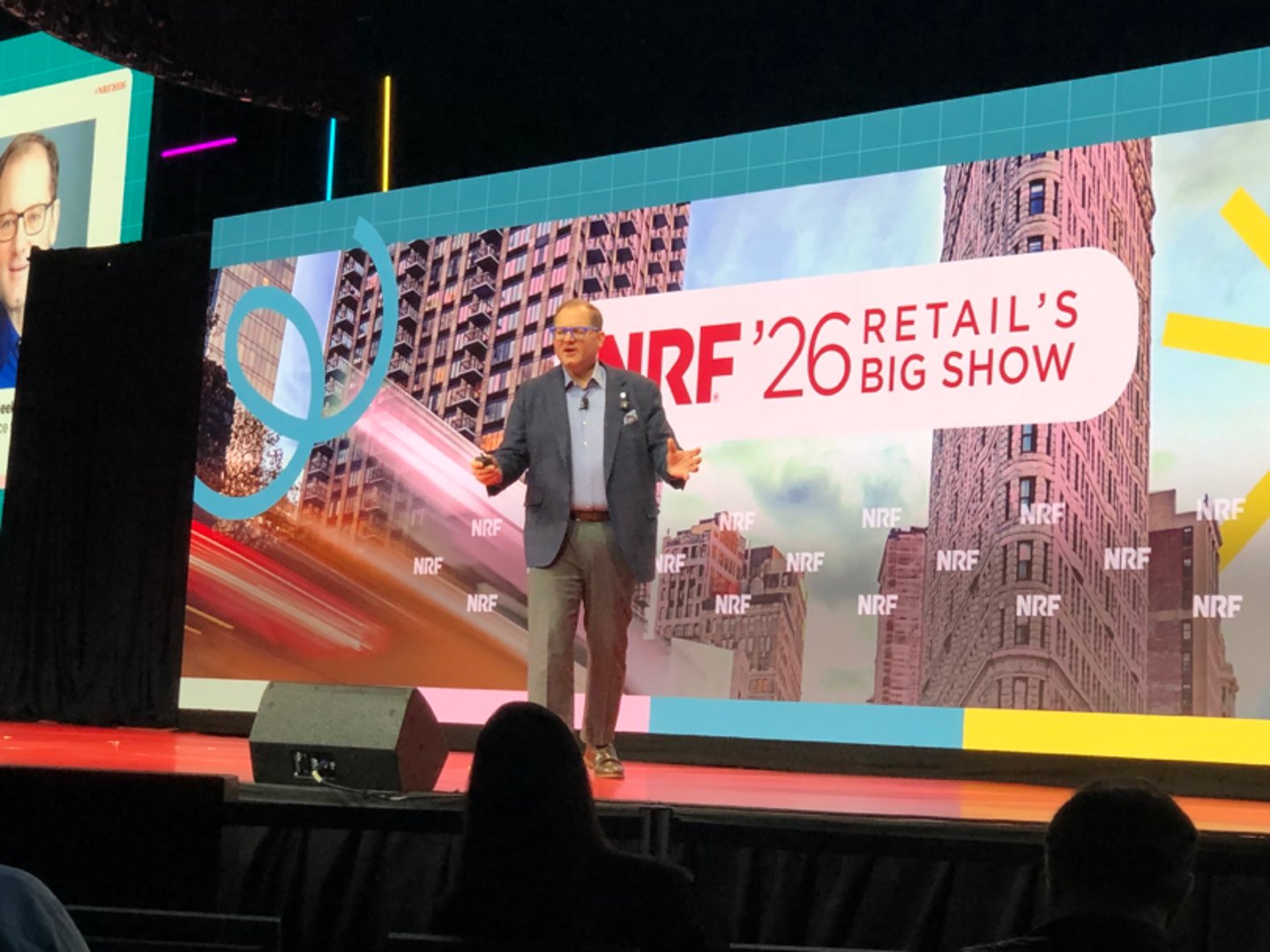
Artificial intelligence will disrupt retail more profoundly than e-commerce or social media, creating entirely new consumer behaviors that many incumbents are poorly equipped to handle, Jason Goldberg, Publicis Groupe’s chief commerce strategy officer, said at the National Retail Federation's (NRF) Big Show this month.
“Agentic commerce is a tool that can impact almost anything,” Goldberg said, referring to AI systems that can act on behalf of consumers to anticipate needs and make decisions. “There are obvious efficiencies, big improvements to supply chain, staffing and product management. But the much bigger disruptive change is new consumer behaviors driven by AI.”
Goldberg warned that the industry risks underestimating the scale of the shift by focusing too narrowly on operational gains.
“We’re having the same argument we had with e-commerce and then social,” he said. “Personally, I think you’re better off thinking about the whole iceberg rather than just the bit above the surface.”
Such moments are especially dangerous for established players, Goldberg added.
“This level of disruption is generally not great for incumbents,” he said. “Companies that innovate rarely become the company that disrupts themselves.”
He pointed to past technology cycles in which market leaders failed to adapt quickly enough when consumer behavior fundamentally changed, noting that the divergence is already visible in growth figures. Newer platforms such as Shein, Temu and TikTok Shop, he argued, have rewritten the rules of retail by building businesses natively around data, speed and social influence.
One of the most acute pressures is on product discovery, traditionally a core strength of physical retail.
“The greatest driver of discovery we ever saw was in-store,” he said. “But that’s being disrupted. Online shopping removed much of the serendipity of browsing, while social media replaced it with viral trends that come and go too quickly for retailers to react.”
AI, however, threatens to short-circuit discovery altogether, he argued, with large language models increasingly becoming the interface between consumers and products.
“I’m increasingly just going to OpenAI,” Goldberg said. “The robot gets more words and provides better answers based on every question I’ve ever asked. What began as conversational search now includes product tiles and direct purchasing, with companies such as ChatGPT, Target, Walmart, Microsoft’s Copilot, Google and Apple all moving toward embedded commerce.
“Agentic isn’t ‘order me a new ingredient,’” he added. “It’s ‘never let me run out of that ingredient again,’ and in that world, the traditional shopping journey disappears. What used to be 22 clicks is now zero clicks. All that friction and marketing just goes away.”
New AI-native browsers such as Comet and Atlas are early examples of this shift. ChatGPT alone was handling an estimated 52.5 million commerce-related prompts per day last July, a figure Goldberg said may now exceed 100 million.
Most unsettling for brands and retailers, he said, is how these systems decide what to buy.
“Robots are increasingly using social media information rather than retailer information to decide what the best product is,” Goldberg said. “That change weakens retailers’ control over discovery, pricing power and brand storytelling. If you think this is just about efficiency, you’re missing the point. This is about who controls the relationship when the customer isn’t even the one clicking anymore.”