How to Build Brand Love in the Agentic Era and Its Retail Media Implications


Some brands selling on Amazon have told Kiri Masters that their product description page traffic is down considerably — about 20% or so.
The most plausible explanation for this?
More consumers are doing research through artificial intelligence applications that use large language models (LLMs) — such as ChatGPT or Google Gemini — said Masters, a retail media industry analyst.
"I still think that we have irreversibly changed course, and we're not going back to the way that we used to shop before," she said.
At P2PI LIVE & Expo, Masters explained the current state of agentic shopping, or AI-enabled buying, and what brands should do to thrive in the future.
Consumers are curious about agentic shopping – especially for grocery and household purchases, Masters said. Therefore brands should get curious about the following:
1. The factors influencing AI.
2. How agentic shopping will affect your retail partners.
3. The presence of ads in AI.
4. When the right time is to act.
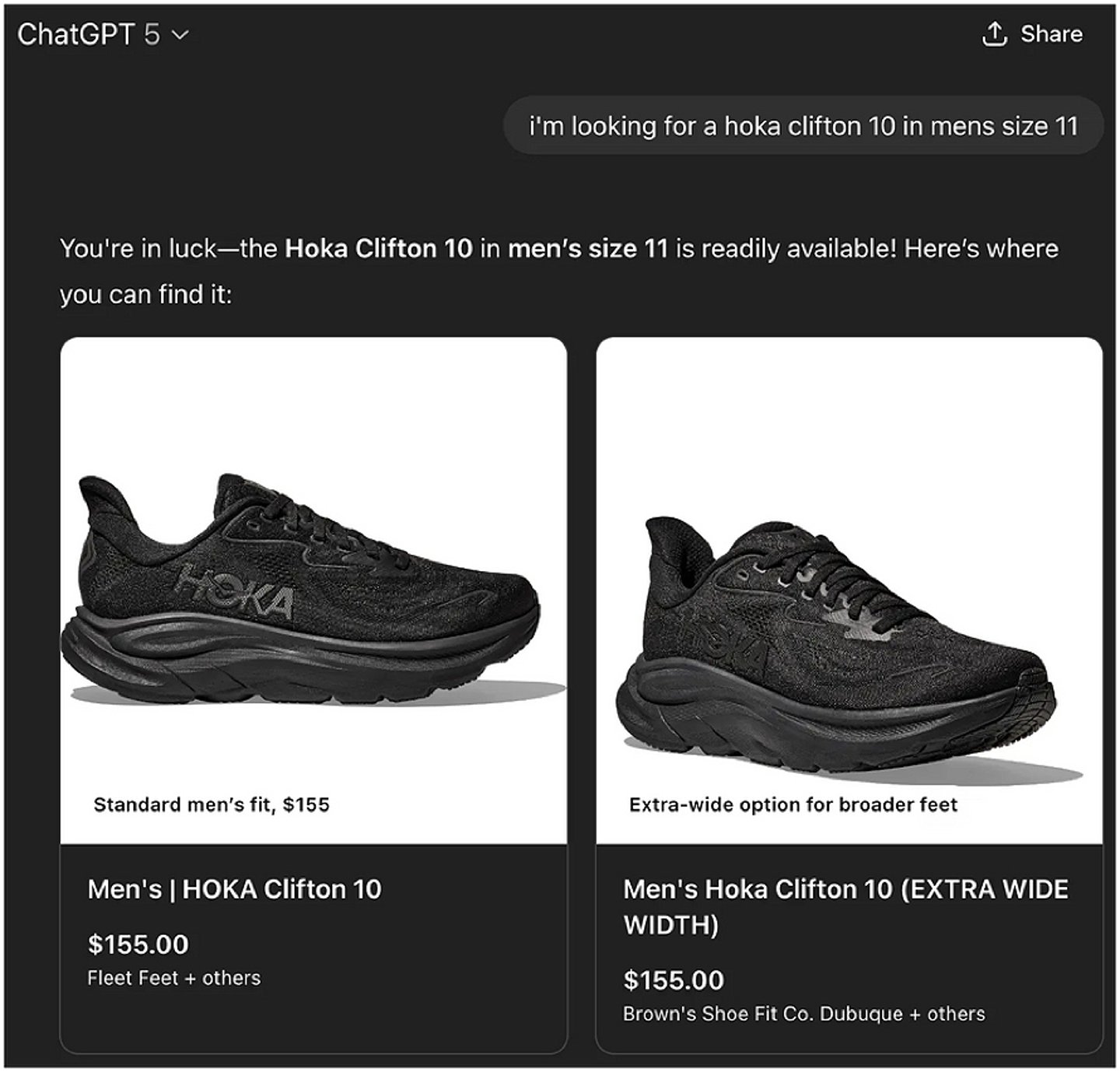
Masters said it's wise not to overlook generative engine optimization, or GEO. These are the practices and tactics to get a brand's product showing up as query inside an LLM.
Consumer prompts about certain items could result in an LLM displaying a product card (pictured right). Several different retailers will appear that shoppers can choose from on the product card.
"As a brand, you want a product card to be showing up in a relevant search," Masters said. "And as a retailer, you want to be showing up as one of these retailers that the product is available to buy from."
Even if brands know exactly what the AI systems are looking for, they don't have much control over those factors. That’s why it's important for them to have conversations with their retailer partners about how to approach AI.
Brands and retailers can work together on providing better product content, ensuring everyone succeeds with the product card ecosystem inside LLMs, Masters said.
Impact on Retail Media
One concern retail media networks will have is seeing more consumers using AI platforms to learn about products instead of visiting retailer websites — thus minimizing on-site ad impressions.
"If ads come to ChatGPT, you're going to move some spend over there, and it's probably going to come from retailer dot com, who are actually seeing declines in traffic," Masters said.
Off-site media is also at risk because now the AI companies will have the same transaction data that previously only the retailers had, Masters said.
Although AI competition might loom over on-site and off-site media, in-store retail media is in a healthier place, she said. But in-store media currently makes up a much smaller percentage of ad spend.
"So this means as brands, retailers are going to be looking for new ways to partner with you," Masters said. "They're going to be looking to make up that difference. … I hope that means an opportunity for a reset with retail media."
Looking Ahead
Consumers will ultimately be the ones leading the way, Masters said. They will be followed by brands that want to be where they are, and then the retailers will follow suit.
As agentic shopping continues to evolve, it's essential for brands to have an open mind for the journey. The winners will be the ones who lean in with curiosity, she said.
"We don't get to decide if these shifts happen, but we do get to decide when we notice them," Masters said. "And noticing them early is the closest thing that you have to an advantage."