Why Precision Matters in Retail Media — and Why P2PI Has Always Chosen It


Retail media has become one of the most talked-about and fastest-growing areas in commerce marketing. But as the space has expanded, so has its terminology.
Today, "retail media network" is often used as a catchall phrase to describe everything from retailer-owned ad platforms to agency-run networks, tech providers and commerce media solutions.
At the Path to Purchase Institute, we made a deliberate choice early on to be more precise. From the beginning, we’ve used "retailer media network" (RMN) to describe media networks owned and operated by retailers. It’s a distinction that may seem subtle, but one we believe is increasingly important as the ecosystem matures.
Precision over popularity isn’t always the easiest path. But for an industry built on clarity, measurement and accountability, language matters.
That philosophy has guided P2PI’s retail media coverage and programming for years, long before “retail media” became an industry buzzword.
In 2020, we launched our first Retailer Media Network (RMN) Ratings report, benchmarking retailer-owned networks based on real feedback from brand executives. What started as an early snapshot has since evolved into an annual industry barometer.
Our recently released 2026 RMN Ratings report shows not just who’s leading, but how far the category has come and where gaps remain across targeting, measurement, ROI, data sharing and self-service capabilities.
That same commitment to depth and differentiation shows up across our broader retail media portfolio. Our Retail Media Summit and Retail Media Summit Canada were among the first events of their kind, designed to move beyond surface-level hype and bring brands, retailers and solution providers into candid conversations about what’s actually working and what needs to change. These events focus on execution, measurement and organizational realities, not just ambition.

We’ve also invested heavily in creating tools that help the industry visualize and navigate complexity. We first released our Omnichannel Landscape in the U.S. in 2022 and later expanded and updated it. We also launched a dedicated Canada version in 2025.
These interactive charts map retailer media networks alongside in-store retail media, commerce platforms and enabling technologies. They are not simply directories; they are a reflection of a fragmented yet interconnected ecosystem.
As retail media has grown, so has demand for guidance. In response, P2PI released the Retail Media Planning & Analysis Playbook in 2025, opening up best practices developed inside our Retail Media Guild, a members-only share group launched in 2023. The Guild brings together leaders from brands, retailers, agencies and solution providers for closed-door discussions focused on real-world challenges, from budgeting and creative to AI-driven optimization.
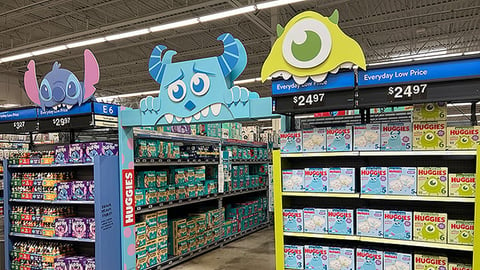
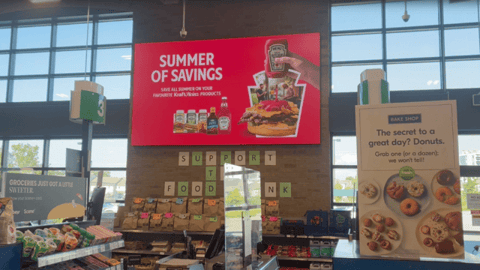
We’ve also remained ahead of the curve in one area often overlooked in early retail media conversations: in-store retail media — not to be confused with traditional in-store media like static shelf signage.
Digital retail media surged first, but P2PI has consistently covered how physical-store environments fit into omnichannel strategies and why they’re essential to closing the loop between media exposure and purchase.
That focus will extend further this year with the launch of InStore Ignite, a P2PI event designed to help brands and retailers elevate in-store marketing and better understand the impact of digitally influenced sales. Taking place Nov. 10-12 in Chicago, the curated experience will blend research, workshops and immersive store tours, with a strong emphasis on in-store retail media and omnichannel execution.
Finally, through our Retail Media Awards program, launched in 2023, we’ve made it a priority to recognize the individuals and teams pushing the channel forward; not just with scale, but with rigor, innovation and measurable impact.
Retail media will continue to evolve, and so will its language. But at P2PI, our approach remains the same: define the category clearly, track its progress honestly, and give the industry the tools it needs to move from momentum to maturity.