Walmart, Avery Dennison Usher in New Grocery Era

Walmart has set a new benchmark for grocery innovation by partnering with Avery Dennison to solve one of the toughest problems in food retail: how to digitally track freshness in the perimeter.
In a first-of-its-kind collaboration with Walmart announced Oct. 22, Avery Dennison has developed breakthrough RFID sensor technology capable of functioning in high-moisture, cold environments such as meat cases — an innovation many considered far-fetched. The new solution gives every item in the meat, bakery and deli departments a digital identity, enabling store associates to track freshness, rotate products more efficiently, and make smarter markdown decisions — all while reducing food waste and improving on-shelf availability.
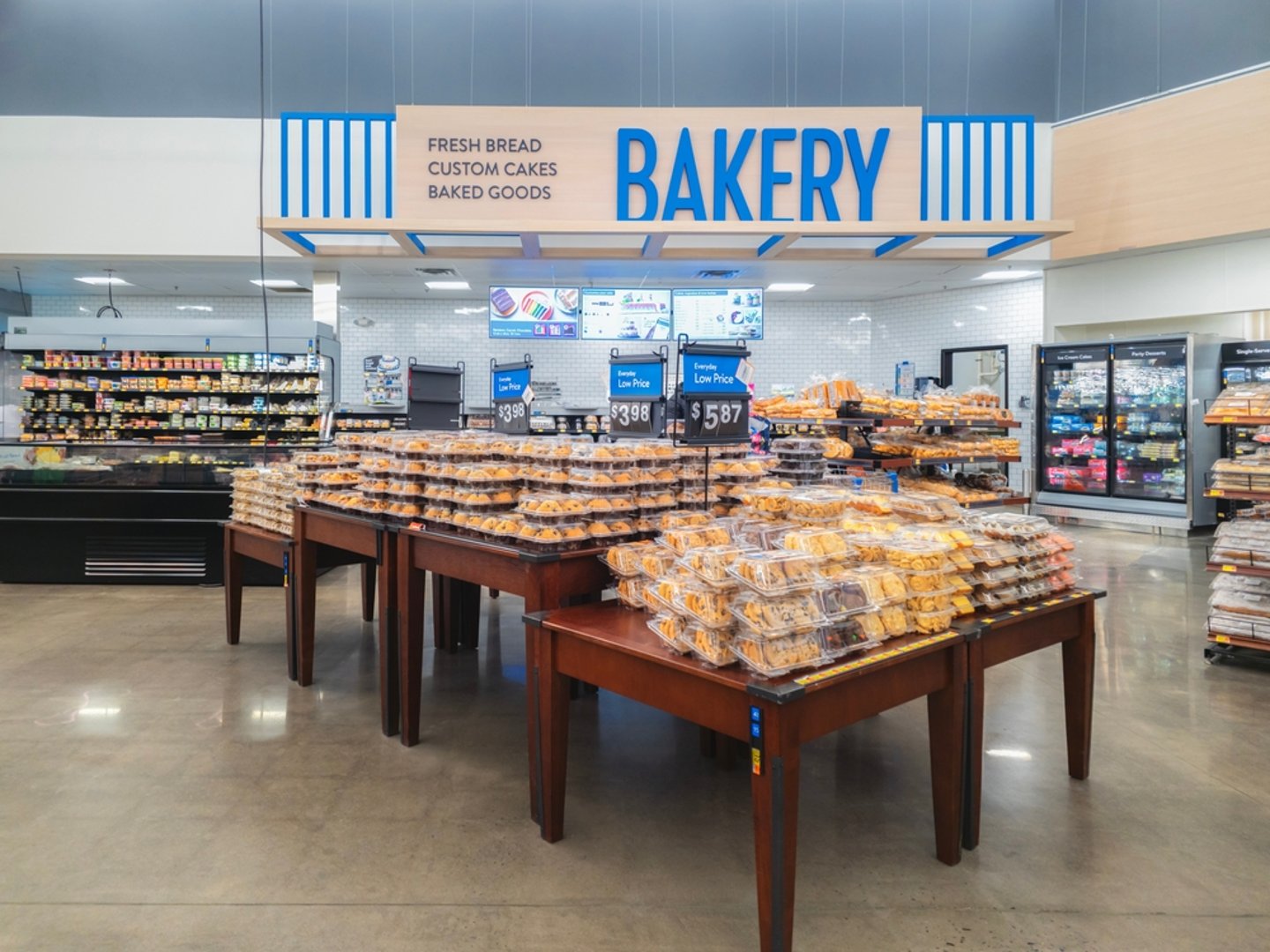
Avery Dennison’s intelligent labeling solution is being used across Walmart’s meat, deli and bakery departments, giving every item its own digital identity for real-time freshness and expiration data.
For grocers, the implications go far beyond Walmart’s aisles. The RFID advancement marks a new era of automated item-level visibility in categories that have historically relied on manual tracking. It represents a step-change in how retailers can balance freshness, sustainability and labor efficiency — issues that have become mission-critical across the food retail landscape.
To explore what this means for the grocery industry, Progressive Grocer spoke with Julie Vargas, VP and general manager of identification solutions at Avery Dennison, who discussed how this innovation can help retailers transform store operations, support associates and advance their sustainability goals.
“This takes an operation that used to take hours a day down to minutes,” Vargas said. “Associates can instantly see what needs to be marked down, what needs to be pulled and what needs to be restocked. It’s a game-changer for efficiency, accuracy and sustainability.”
Solving the 'Impossible' Environment
For years, RFID technology was thought to be critically susceptible to the moisture, condensation and refrigeration in fresh departments. But Avery Dennison’s advanced technology team engineered new sensor materials and antenna designs capable of reading with high fidelity even in cold, wet environments.
“It looks simple — like tagging a t-shirt — but the physics behind it are incredibly complex,” Vargas said. “The biggest breakthrough is tagging the new categories of deli and protein. There were huge technical hurdles we had to overcome, from adhesive construction to how radio frequency behaves with dense, liquid-rich products. Our background in material science, sensor technology and scale manufacturing came together to make it work seamlessly.”
In stores, the system’s simplicity is also what makes it revolutionary. Instead of manually checking every label, Walmart associates now use RFID-enabled handheld scanners — or “magic wands,” as Vargas called them — to instantly detect which items are approaching their sell-by date.
“Anyone who’s ever done inventory knows counting isn’t our favorite thing,” Vargas said. “Now, instead of picking up every steak to check its date, associates wave the wand and get a precise list of what’s ready for markdown or needs to be removed.”
That automation dramatically improves accuracy and freshness, while reducing labor hours to give associates more time to help customers.
“We designed the solution to fit seamlessly into how stores already operate, fitting into their existing process of how they tag, stock and rotate products,” she said. “The goal isn’t to change the associate’s job, it is to make fresh inventory management faster, smarter and more accurate.”
Less Waste, More Profit
Fresh departments are often the hardest to manage profitably. Vargas said the technology directly addresses “the messy money in the middle” — the financial gray area where unsold food quietly eats into profits. “You have literal dollars going into the trash when food expires unsold,” she explained. “Now, associates can take action in time to sell that product or pull it before it becomes waste.”
Beyond financials, the sustainability benefit is enormous.
“Roughly a third of food produced globally for human consumption ends up in landfills -- and about 40% of that waste happens in the supply chain and retail,” Vargas noted. “This solution directly connects production to consumption, helping retailers reduce food waste, lower emissions, and meet their sustainability goals.”
The initiative aligns with Walmart’s public target to cut operational food loss and waste intensity in half by 2030. Vargas emphasized that while Walmart is leading, the same technology can help other retailers move toward similar benchmarks.
For seasoned department managers, the data supports better decision-making from markdown optimization to production planning. “In bakery, it means you know exactly how many fresh cookies to bake for the afternoon rush. In meat, you can plan cutting schedules around the 5 p.m. peak. It’s the intersection of freshness and operational intelligence,” she said.
The system’s intuitive design also simplifies training. “You can take someone who just started today and train them in minutes to identify what needs to be removed or marked down,” Vargas said. “It’s that simple.”
The feedback from store teams, she added, has been overwhelmingly positive. “When associates realize they no longer have to search for tiny expiration dates, they’re thrilled. It’s the kind of innovation that just makes sense the first time you see it.”
A Launchpad for the Industry
While Walmart is the first to adopt Avery Dennison’s RFID-for-fresh solution in the meat and deli department, this builds on the previous announcement by Kroger of their collaboration within bakery. Avery Dennison expects broader grocery adoption to follow quickly, with Vargas adding: “Any retailer already tagging products with a fresh-by date can deploy this.
It scales across banners, formats and price points with minimal infrastructure investment.” Integration is flexible, working with both basic and advanced inventory systems. “Some retailers are still using clipboards; others are running AI-driven forecasting models,” Vargas said. “RFID improves both because you’re feeding them more accurate, item-level data; what you have, when it expires and where it is.”
There is also an opportunity to extend the same visibility upstream to processors and suppliers. “That’s the holy grail,” she said. “Once CPGs start embedding this data at the point of production, we’ll have true source-to-store transparency.”
The innovation is also laying the groundwork for richer data insights across the food value chain. “With AI and large language models, what we can do with this data — and how fast — is accelerating,” Vargas explained. “Item-level freshness and origin data will help retailers improve forecasting, replenishment, and even sustainability reporting.”
That level of visibility also supports compliance and traceability as the FDA’s FSMA 204 rules take effect. “Once you can see every item’s journey, from farm to store shelf, you can respond faster to recalls, meet new regulatory standards and provide a whole new level of consumer trust” she said.
90 Years of Innovation
For Avery Dennison, the expanded Walmart collaboration represents a new chapter in the company’s impressive 90-year history of connecting physical and digital information. “Our founder, Stan Avery, created the self-adhesive label,” Vargas reflected. “Twenty years ago we began transforming packaging into a digital interface. Now we’re doing that at the item level, wirelessly and automatically, with accuracy at scale.”
The initiative also builds on Avery Dennison’s Optica platform, which links products, data and transparency across the supply chain. “We’re tackling four big challenges,” Vargas said. “Supply-chain and labor efficiency, reducing waste, advancing sustainability, circularity and transparency, and consumer engagement. This technology addresses all four.”
By bringing RFID into the meat department, Walmart has broken through one of grocery’s final digital frontiers — and set the stage for a smarter, more sustainable era in food retail.
“This is what leadership looks like,” Vargas said. “Taking on a challenge everyone said couldn’t be done and proving that technology can make life better for associates, for customers, and for the planet. That’s where the future of grocery is headed.”
This article was originally published on P2PI sibling publication, Progressive Grocer. Read the full story here.