P2PI's BevAlc Commerce Initiative Unites Around Consumer-First Approach to Develop PDP Recommendations

Interested in contributing to industry-wide PDP standards and other BevAlc initiatives? Join P2PI's BACi and collaborate with peers shaping the future of the digital alcohol aisle. Learn more here.
While the digital shelf is key for brands looking to boost and maximize sales, it’s a space where the beverage-alcohol (BevAlc) industry trails other CPG sectors due to regulations on how its products are sold and marketed.
The surge in e-commerce shopping during the pandemic led to more opportunities for online BevAlc sales through marketplaces like Instacart, DoorDash and national retailers, but product detail pages (PDP) are often still bare bones and don't capture the opportunity to engage, educate and inspire consumers during a critical shopper moment.
"It has been over five years since we have had online product listing requirements, and the beverage alcohol digital aisle remains fragmented," said Tammy Ackerman, vice president ecommerce & DTC marketing at Treasury Wine Estates, reflecting on the digital evolution within the BevAlc category. "This gap presented an opportunity for industry leaders to collaborate on a consumer-first approach to elevate the entire category. Discussions within BACi sparked the development of the PDP recommendations, and the support and feedback we have received helped shape the project.
"While there is more work to be done, I am proud of the energy and commitment shown across the industry for this initiative."
Over the past year, the BevAlc Commerce Initiative (BACi) has brought together digital leaders in the BevAlc space to elevate the category’s e-commerce presence, beginning with best practices for PDPs and aiming to enhance the entire path to purchase.
ProductWind chief marketing officer and firstmovr board member and contributor Amanda Wolff, one of the leaders of the recommendations, discussed the findings with the Path to Purchase Institute.
"Even the smallest beauty brands who are selling on some of the smallest beauty retailers have product detail pages that can present product information that's quite detailed and quite robust. In the beverage-alcohol industry, it’s a pretty big cliff dive," said Wolff, who formerly served as chief revenue officer at Jenda, a commercial execution data company focused on the BevAlc category. "It's a very fragmented market that's represented by a lot of independent stores, and yet those independents have very spotty representation in terms of how a brand's product content appears in the digital shelf space."
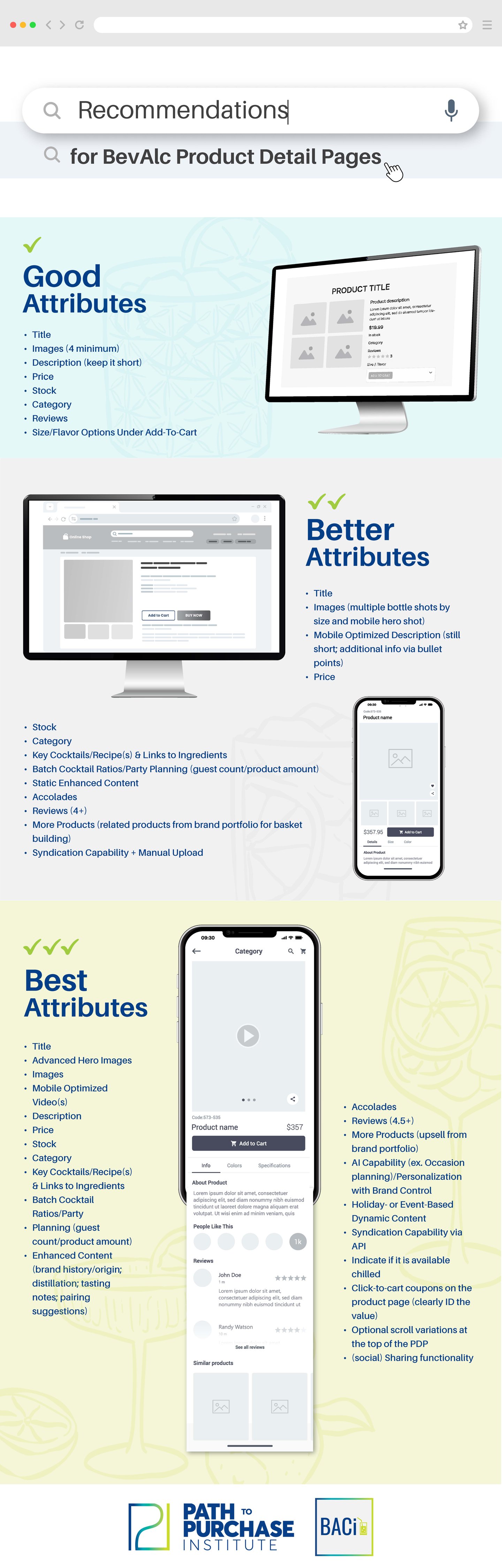
Wolff acknowledges it's not realistic to expect a local liquor store to have a website with the same level of sophistication as Walmart or Kroger. That's why BACi kicked off its work on recommendations for the industry. The goal of their "good, better, best" framework is to provide a roadmap for brands and retailers in the BevAlc category to elevate together and enhance the consumer shopping journey.
Many product pages currently have just a price, product name and category. At a minimum, BACi recommends that online product listings include a product shot, a description, stock availability and links to related products.
Storefronts that already have all those details are considered good, but they can be further improved with product reviews and syndication capabilities. The best pages could be improved by having mobile-ready hero images, additional carousel images to help tell the product's story, recipes, API-powered syndication capabilities, and enhanced content.
"In the end, this is about customer experience and about the betterment of everybody's journey through shopping and the path to purchase, and not just about what brands' expectations are when it comes to how they want their brand represented," Wolff said.
Better PDPs will improve a retailer's organic search placements and the performance of their paid media, increasing page views. Once shoppers get to the page, clear images and product information can help drive conversion. According to a 2024 Profitero report, 68% of consumers said that the content and reviews on a retailer's website is more influential than in-store signage and displays.
Elevating the industry standards for product detail pages is a work in progress, involving coordination with brands, service providers and retailers. As more digital leaders join the initiative, the entire BevAlc category can move with pace toward an online presence that meets consumers expectations.
Interested in learning more about this project? Join BACi and connect at our in-person meeting on Nov. 12, 2025 at P2PI LIVE & Expo. Registration is now open.