The Legacy of Publix

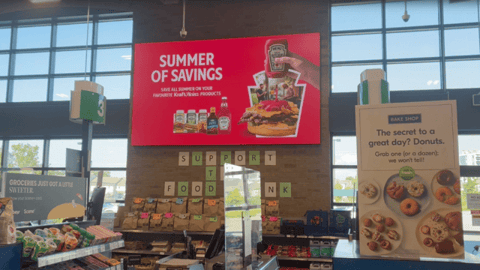
When shoppers walk into a Publix store, they don’t see robots prowling the aisles or giant screens urging them to buy more. There are no smart carts calculating totals, nor are there shelves that light up to demand attention.
Instead, shoppers find something radical in its simplicity: calm, serenity, warmth. The lighting is gentle, the shelves are immaculate, and the associates greet you as if they’ve been expecting you all day long.
That sense of ease in a Publix store is the byproduct of a 95-year philosophy, one that places dignity, courtesy and ownership above digital gadgetry. In the world of grocery, where automation often masquerades as progress, Publix’s restraint feels almost revolutionary.
You might even say that these are stores where shopping is, quite literally, a pleasure.
Mr. George’s Dream
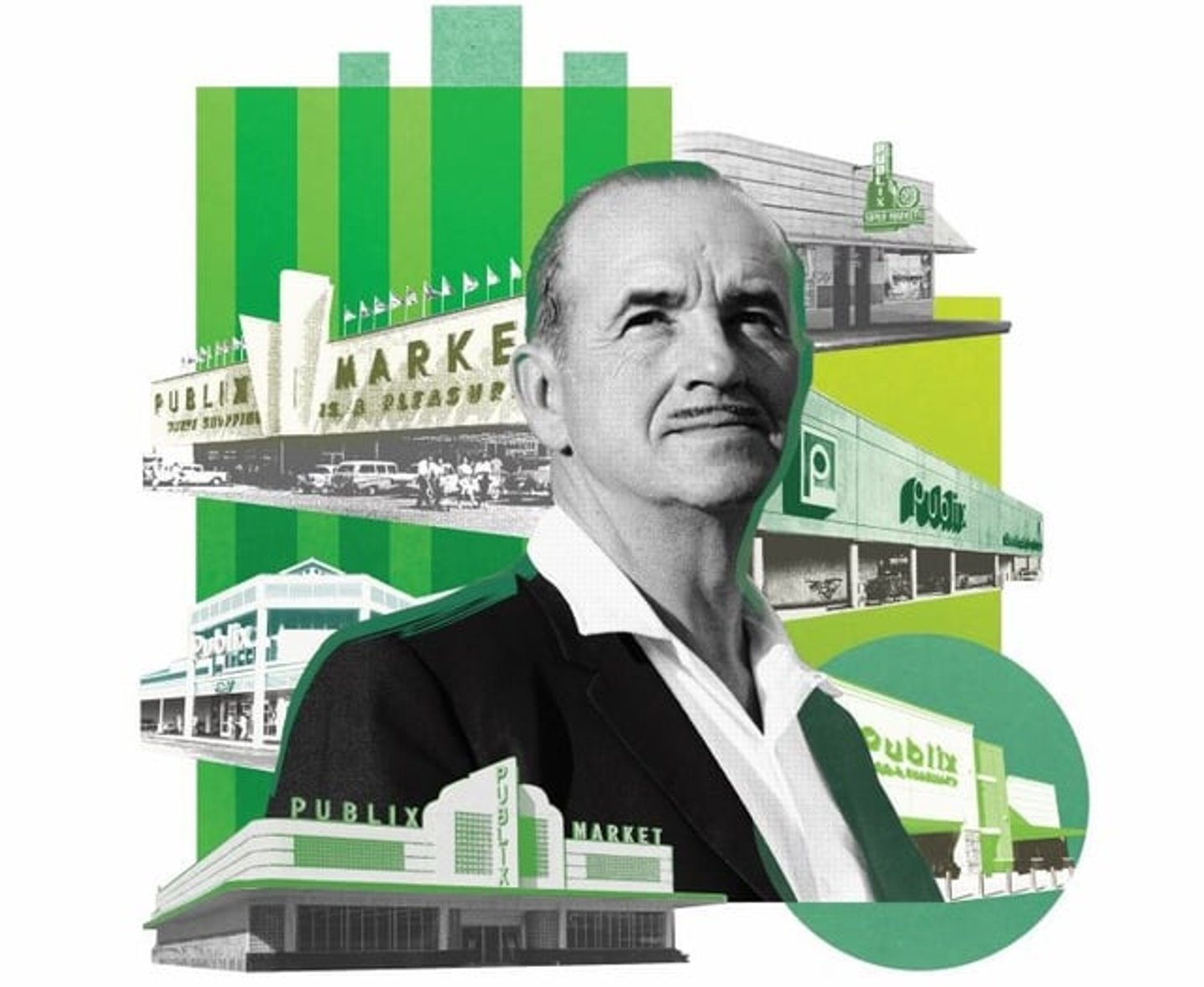
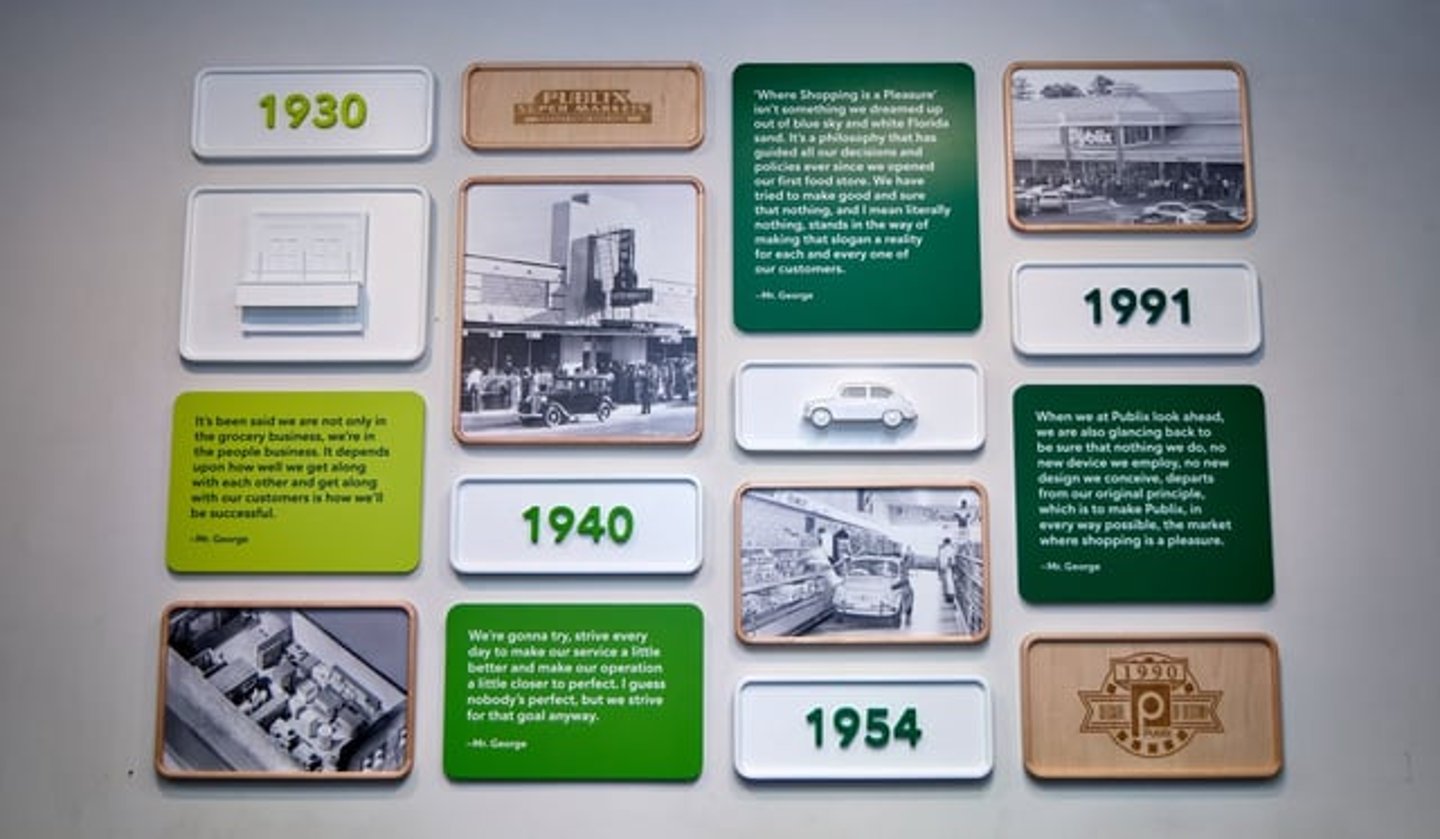
When 22-year-old George Jenkins opened his first Publix in Winter Haven, Florida, in 1930, he wanted to build a grocery store unlike any other. His dream was to deliver the finest service in the finest stores with the finest employees.
In 1954, when advertising director Bill Schroter proposed a new slogan inspired by what customers were saying about Publix stores, “Where Shopping Is a Pleasure,” Mr. George (as everyone in the grocery industry called him) instantly saw that it captured the company’s soul. “This isn’t something we dreamed up out of blue sky and white Florida sand,” he later said. “It’s a philosophy that has guided all our decisions and policies ever since.”
Nearly a century later, that philosophy not only defines the brand, but also underpins a business model that continues to achieve colossal growth in delighting shoppers. With more than 1,420 stores across eight states and annual sales exceeding $59.7 billion, Publix celebrates its 95th anniversary this year not as a nostalgia play but as proof that doing business the right way still works.
“Publix is a strong brand that has lasted and resonated for 95 years,” CEO Kevin Murphy says. “It’s a credit to our foundation, our values and standards. That loyalty and dedication that’s been earned over many years continues to resonate.”

Murphy’s own story mirrors that of thousands of Publix associates who turned part-time jobs into lifelong careers. “I started at 14 bagging groceries, and it’s worked out pretty well,” he jokes in an interview at the company’s Lakeland, Fla., headquarters.
He says that what Publix gave him, and what he now tries to give back, is opportunity. “It’s rare these days to grow and mature personally while growing and maturing in your career,” Murphy notes. “Publix offers that at every level. Our people can come in at 16 or 60 and still find a path to their personal best.”
Longtime colleagues remember how Murphy was always hanging around after his shift, looking for ways to do things better: “He had to be told to go home.” That relentless curiosity made him one of the company’s best operators.
“For me, being an operator is about atmosphere,” Murphy explains. “What does it feel like when you walk in? What weather are your associates creating? Customers who feel welcome shop longer, and they buy more.”
He often walks stores and notices small things: a crooked label, a warm greeting, the scent of fresh bread. “Those details tell you everything,” he says. “We’re not just selling groceries. We’re selling a feeling: that you’re wanted, that you’re valued.”

Grand Opening Every Day
Murphy often reminds associates that consistency is Publix’s greatest strength, as well as its greatest challenge. “We chase grand opening every day in every store,” he says. “Few retailers are willing to do what it takes to repeat that experience every single day, but we do.”
Murphy calls repetition the art of discipline: “We operate 15 hours a day, seven days a week, and maintain standards, conditions, freshness, everything. Our goal is to deliver the same great shopping experience at 8 a.m. on a Tuesday as we do on grand-opening day.”
That operational rigor is also paired with humanity. “Our customers don’t just expect clean floors and full shelves,” he says. “They expect eye contact. They expect kindness. That’s what we deliver.”
From its Florida base, Publix now stretches through Georgia, Alabama, Tennessee, South Carolina, North Carolina, Virginia, and Kentucky, opening roughly 30 new locations each year. Expansion could easily dilute the culture, but Murphy insists otherwise.
“We operate the same Publix in eight states,” he says. “We don’t change our prototypes or standards. Publix is Publix. Over 95 years, we’ve identified the best way to operate a supermarket, and that’s what customers expect.”
Still, the business environment is tougher than ever. Regulatory pressures climb, costs soar and competitors multiply. Yet Murphy’s optimism remains intact. “We just want to sell groceries and take care of our customers,” he says. “With the loyalty of our associates and communities, our outlook is very positive. … The responsibility of protecting this company, our people and their futures never leaves my mind. It’s a weight, but it’s a privilege.”
Manufacturing Muscle
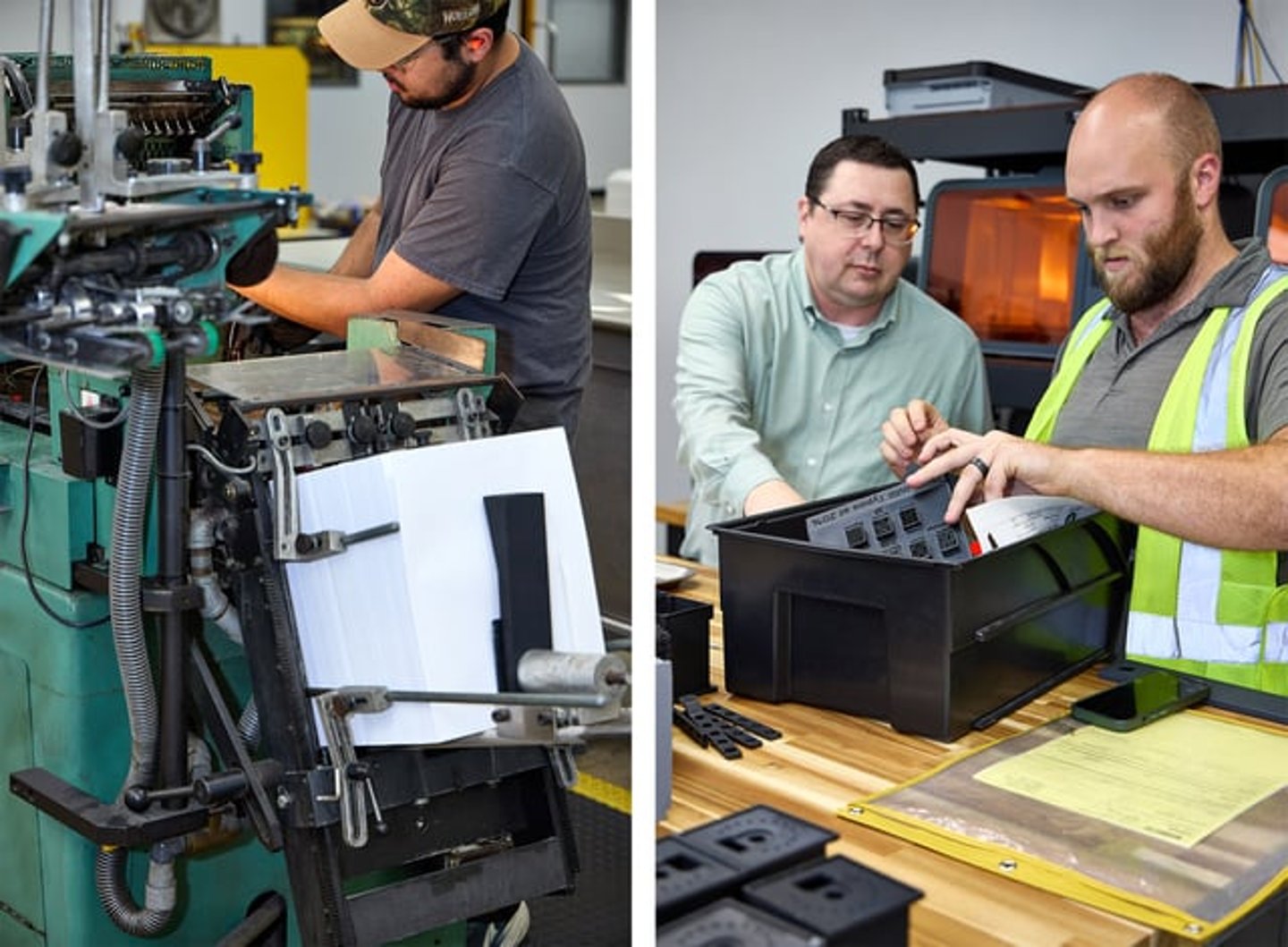
Publix is more vertically integrated than most of its competitors, operating 10 food plants and its own printing facility.
“It doesn’t make sense for us to make green beans,” says Doug Harris, VP of manufacturing, who led Progressive Grocer on a tour of one of his plants, “but it does make sense to process our own milk, make our own ice cream and bake our own bread. It boils down to quality, service and competitive advantage.”
He calls the company’s 1980s-era decision to open its own dairy plant “one of the smartest moves Publix ever made.” That plant, which now produces milk, tea and water for all Publix stores, remains a model of innovation and efficiency.
“The most important innovation for us isn’t always technological,” Harris adds. “It’s our safety culture. The greatest way to show associates we care is to provide a safe workplace. Every new hire gets safety training on day one, and that focus never stops.”
At Publix’s Fresh Kitchen facilities in Florida and Georgia, Harris points to precision and speed. “An order comes in at 3:30 p.m., and by 4 p.m. the next day, it’s produced, loaded and delivered,” he says. “We do that 362 days a year for all 1,420-plus stores.”
The company’s 3-D printing capabilities, housed within its printing plant, are also breaking new ground. “We’ve used 3-D printing to produce equipment parts and even a replica of a 1940s Publix car for a company exhibit,” Harris says. “There’s really nothing our team can’t make.”
Behind the machinery, however, is a human legacy. “We try to hire good people and then make them even better,” Harris says. “Publix has made me a better person. And when you retire from here, you want to leave it better than you found it, because the next generation is counting on you.”

Marketing the Memories
For Malinda Renfroe, VP of marketing, protecting Publix’s emotional connection with shoppers is her department’s mission. She started two decades ago as a traffic clerk and now leads a team of 470.
“With a brand that’s 95 years old, you have to balance nostalgia and innovation,” she says. “Customers remember getting a cookie from the bakery as a child, and that sense of memory is powerful. But we also have to evolve.”
She points to Publix’s internal culture as one reason that the message stays authentic. “We overinvest in people who are willing to invest in themselves,” Renfroe says. “That’s what keeps our culture strong, and it’s why our storytelling feels real.”
Club Publix, the retailer’s loyalty platform, embodies that blend of tradition and technology. “It enables one-to-one communication and personalized offers,” she explains, “but unlike other retailers, you don’t need to be a member to get our deals. That comes straight from Mr. George’s belief that everyone should be treated like kings and queens.”
Her marketing philosophy extends to emotion. “The first thing customers say to me is, ‘I love your Christmas spots,’” Renfroe says. “Our campaigns resonate because they show we understand our customers want to create special moments for their loved ones, and we help them do that.”
Those “special moments” are a deliberate part of the company’s creative strategy. “Our brand work is slightly aspirational but always grounded in real life,” she adds. “It’s about showing the food, the family and the feeling of belonging. You can’t fake that.”
Renfroe’s department has even documented a “Publix way” of storytelling so future leaders never lose the brand’s voice. “It starts with strategy,” she notes. “Before every campaign, we ask: Does this stay true to who we are? Does it make our customers feel something real?”
Looking Ahead to 100
Even as it honors the past, Publix is building toward its centennial. “We have a team actively working on the 100th anniversary,” Murphy confirms. “It’s about owning the legacy and paying homage to where we’ve been, while staying relevant for where we’re headed.”
He views that task as both a privilege and a duty. “Every generation of Publix leaders has protected this company for the next one,” Murphy says. “That’s my job now, to make sure the next generation inherits a company that’s even stronger than the one I did.”
Murphy smiles when asked about the secret to Publix’s longevity. “We’re in the people business; we just happen to sell groceries,” he asserts. “As long as we keep that at the center, Publix will be strong for the next 95 years. If you treat people right, they’ll treat your customers right. That’s been true for 95 years, and it’ll still be true at 100.”
In the end, Publix’s legacy is about the disciplined grace of doing simple things extraordinarily well. Clean stores. Fresh food. Loyal associates. Customers who feel at home.
“Few retailers are willing to do what it takes to repeat that experience every single day,” Murphy notes. “That’s what makes us hard to compete with.”
For 95 years, that pursuit – humble, relentless and profoundly human – has made shopping at Publix not just convenient, but also genuinely pleasurable. In an era obsessed with disruption, that may be the boldest idea of all.
This article was originally published on P2PI's sibling publication, Progressive Grocer. Read the full article here.